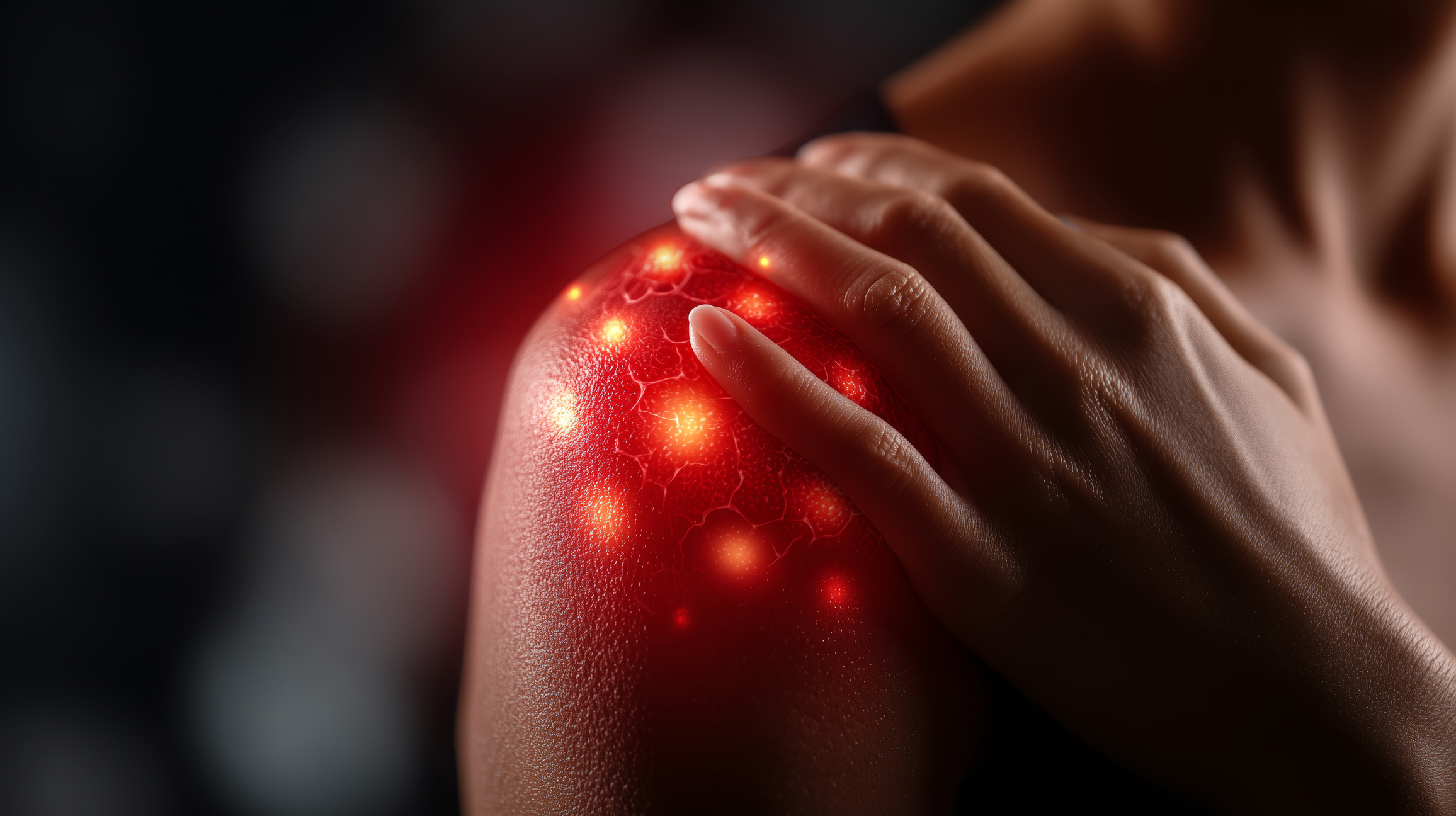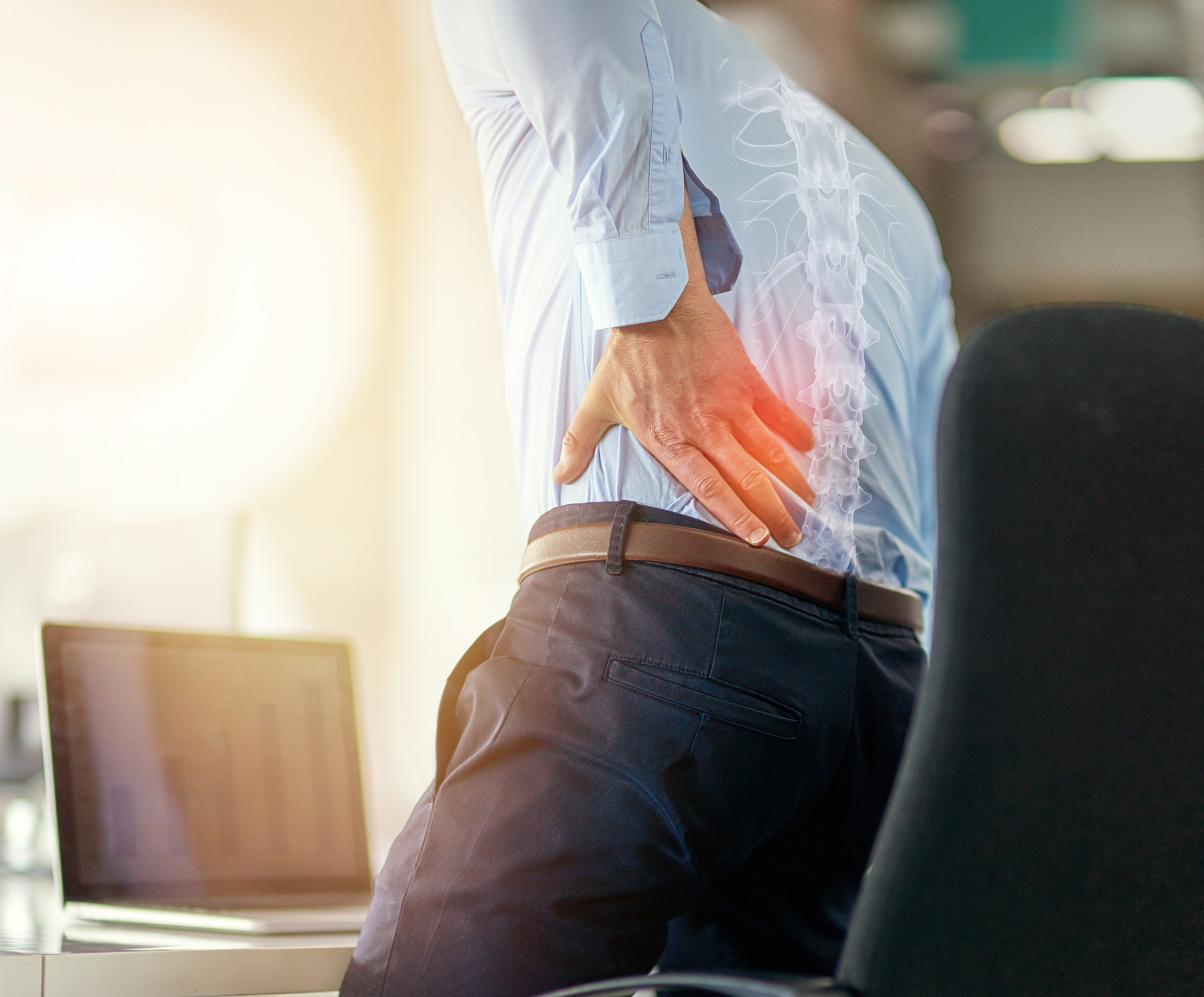

Most people think of pain as a symptom. Your knee hurts, your back aches, or your neck feels stiff. What many people do not realize is that pain can also change the way you stand, sit, walk, and carry yourself throughout the day.
These changes are often subtle at first. You may shift your weight away from a painful joint, lean to one side while standing, or start avoiding certain positions without even realizing it. These adjustments are the body’s attempt to protect itself.[1]
Chronic pain can change how you move and often causes the body to develop protective habits. Over time, those habits can affect posture, balance, stability, and overall body mechanics, creating new challenges beyond the original source of pain.[2]
Why Long-Term Pain Often Changes Your Posture
When pain becomes persistent, the body naturally looks for ways to reduce discomfort. One of the most common responses is a change in posture.
Someone with lower back pain may lean forward while standing. A person with hip or knee pain may shift more weight onto the opposite leg. Neck pain can lead to rounded shoulders or a forward-head posture while working, driving, or using electronic devices.[3]
These changes are often temporary at first. But when your pain lasts for months or years, the body may begin treating those altered positions as normal.[4]
Altered posture can place additional stress on muscles, ligaments, and joints throughout the body.[5]
Your Chronic Pain Can Also Affect Balance and Stability
Balance involves much more than simply staying upright. Your muscles, joints, nerves, inner ear, eyes, and brain constantly work together to help you stay stable while standing, walking, turning, and changing positions.[6]
When chronic pain enters the picture, that system doesn’t always work as smoothly as it should. Pain may change how you distribute weight, respond to uneven surfaces, and coordinate movement throughout the day. [7]
Here are some ways persistent pain can leave you feeling unbalanced and unstable:
Pain Can Change How You Distribute Weight
Shifting your weight away from the uncomfortable area is a common pain response. Knee pain makes you favor your opposite leg. Hip pain may feel better if you lean while standing or walking. While this shift or compensation may temporarily reduce discomfort, it can also create new stresses elsewhere in the body. [3]
Your Muscles May Become Less Efficient
When pain limits activity, your muscles can gradually become weaker or less coordinated.[8] Some muscles may become overworked while others are underused, making it harder for the body to maintain stability and proper body mechanics during everyday activities.[4]
Fear Of Pain Can Affect Your Confidence
You may not notice at first, but you could become cautious after experiencing pain during certain movements. Feeling pain may prompt you to avoid taking the stairs, walking on uneven ground, or engaging in exercise or other activities for fear of triggering symptoms. [1] While understandable, this protective behavior can sometimes contribute to reduced confidence and decreased physical function.[9]
Fatigue Can Make Stability More Challenging
Living with chronic pain is physically and mentally exhausting. Pain-related fatigue is common and may affect concentration, reaction time, and physical performance.[10] When your body is tired, maintaining balance and stability can become more difficult.[11]
Joint Pain Can Affect Everyday Function
Chronic joint pain reduces mobility, flexibility, and range of motion.[5] Your pain when moving may lead you to rely more heavily on handrails, furniture, counters, or other forms of support when navigating your environment. These changes may occur gradually and often go unnoticed until they begin to affect daily activities.[7]
Small Changes in Movement You May Not Notice
You probably don’t spend much time thinking about how you stand up from a chair, pick something up from the floor, or reach into a cabinet. These everyday actions are part of what healthcare providers call body mechanics.[12]
Body mechanics refers to the way your body performs everyday activities such as standing, sitting, bending, lifting, reaching, and walking. When pain becomes chronic, people often begin making small adjustments to these movements to stay comfortable.[12]
You may squat differently when picking something up from the floor, shift your weight while standing, or avoid twisting and reaching motions that aggravate symptoms. These changes are often automatic and may develop without you even realizing it.[2]
Altered body mechanics eventually place additional stress on muscles and joints that were not part of the original problem. This is one reason chronic pain sometimes seems to create a ripple effect throughout the body. [4]
Many of these changes are connected to the protective movement patterns and compensation strategies the body develops in response to chronic pain.
Signs Pain May Be Affecting Your Posture and Body Mechanics
Many of these changes develop gradually, making them easy to overlook. It’s not unusual to attribute them to simply getting older, becoming less active, or having an occasional “off day”. These changes may actually be signs that your body has been adapting to discomfort for quite a while.
Some common signs include:
- Leaning more heavily onto one side while standing or walking. [3]
- Slouching or shifting positions frequently to stay comfortable. [5]
- Avoid full weight-bearing on a painful leg or foot. [8]
- Feeling stiff after sitting or standing for long periods. [4]
- Using furniture, counters, or railings for extra support. [7]
- Developing new aches and pains in areas that did not originally hurt. [2]
- Feeling less steady on stairs or uneven ground. [7]
- Becoming tired more quickly during everyday activities. [10]
- Tightening muscles around painful areas or unconsciously bracing for movement. [13]
These protective adaptations may feel helpful at first, but they can sometimes add strain elsewhere.
When Pain Starts Creating A Ripple Effect
The body functions as a connected system. When one area is painful, other muscles and joints often work harder to compensate.[2]
The challenge is that the body does not always compensate evenly. As certain muscles work harder to protect a painful area, other muscles may become underused, creating imbalances that can affect comfort, stability, and overall function.[2]
As compensation patterns continue, some muscles become overworked while others become weaker or less active. This imbalance can contribute to stiffness, fatigue, reduced mobility, and additional stress on surrounding joints.[4]
Practical Ways to Support Better Posture and Balance
Managing chronic pain is not always about forcing yourself to move more. It is often about finding safe, comfortable ways to keep your body engaged.
Depending on your condition, some helpful strategies may include:
- Changing positions regularly throughout the day. [14]
- Taking short walking breaks if prolonged sitting increases stiffness. [1]
- Using supportive seating and workstations when possible.
- Performing provider-approved stretching or mobility exercises. [14]
- Staying physically active within your comfort level. [1]
- Using supportive devices or bracing may also help provide additional stability during certain activities.
- Discuss ongoing balance concerns with your healthcare provider. [6]
Small adjustments may not eliminate pain, but they can help reduce some of the secondary problems that develop when pain begins affecting posture and stability.
Don’t Ignore The Way You Stand, Sit, and Move
Many people assume posture changes, balance problems, or feelings of instability are simply part of getting older. In reality, they may be signs that your body has been adapting to pain for a long time.
These changes are often not permanent. With proper pain management and rehabilitation, many patients can improve function, build confidence, and return to more comfortable daily activities.
If pain has started affecting your posture, balance, or ability to move comfortably throughout the day, it may be worth discussing those changes with your pain management provider. Identifying the root cause of your pain is the first step toward treatment that can help your body feel stable and more like itself again.
Disclaimer: This content is for educational purposes only and is not a substitute for medical advice, diagnosis, or treatment. Pain conditions and treatment options vary from person to person, so always talk with a qualified healthcare provider about what’s right for you. If you experience sudden or worsening pain, or symptoms like numbness, weakness, chest pain, shortness of breath, or changes in bladder or bowel control, seek medical care right away.
Resources:
- O’Sullivan P, Slater H. Movement with pain. Pain Health – Department of Health, Australia [Internet]. Updated October 28, 2023. Accessed June 04, 2026. Available from: https://painhealth.com.au/pain-module/movement-with-pain/
- Merkle SL, Sluka KA, Frey-Law LA. The interaction between pain and movement. J Hand Ther [Internet]. 2020 Jan-Mar;33(1):60-66. doi: 10.1016/j.jht.2018.05.001. Epub 2018 Jul 17. PMID: 30025839; PMCID: PMC6335190. Accessed June 04, 2026. Available from: https://pmc.ncbi.nlm.nih.gov/articles/PMC6335190/
- Senba E, Kami K. Exercise therapy for chronic pain: How does exercise change the limbic brain function? Neurobiol Pain [Internet]. 2023 Sep 4;14:100143. doi: 10.1016/j.ynpai.2023.100143. PMID: 38099274; PMCID: PMC10719519. Accessed June 04, 2026. Available from: https://pmc.ncbi.nlm.nih.gov/articles/PMC10719519/
- Butera KA, Fox EJ, George SZ. Toward a Transformed Understanding: From Pain and Movement to Pain With Movement. Phys Ther [Internet]. 2016 Oct;96(10):1503-1507. doi: 10.2522/ptj.20160211. PMID: 27694519; PMCID: PMC5046190. Accessed June 04, 2026. Available from: https://pmc.ncbi.nlm.nih.gov/articles/PMC5046190/
- Corbett DB, Simon CB, Manini TM, George SZ, Riley JL 3rd, Fillingim RB. Movement-evoked pain: transforming the way we understand and measure pain. Pain [Internet]. 2019 Apr;160(4):757-761. doi: 10.1097/j.pain.0000000000001431. PMID: 30371555; PMCID: PMC6424644. Accessed June 04, 2026. Available from: https://pmc.ncbi.nlm.nih.gov/articles/PMC6424644/
- Feeling off balance? A nerve condition may be to blame. Mayo Clinic Health System [Internet]. Published June 02, 2021. Accessed June 04, 2026. Available from: https://www.mayoclinichealthsystem.org/hometown-health/speaking-of-health/feeling-off-balance-a-nerve-condition-may-be-to-blame
- Chen Y, Cao S, Qian L, Chen W, Wang C, Ma X, Wang X, Huang J. The influence of local pain on balance control in patients with chronic ankle instability. BMC Musculoskelet Disord [Internet]. 2022 Jul 22;23(1):699. doi: 10.1186/s12891-022-05656-4. PMID: 35869458; PMCID: PMC9306023. Accessed June 04, 2026. Available from: https://pmc.ncbi.nlm.nih.gov/articles/PMC9306023/
- Meehan E, Carter B. Moving With Pain: What Principles From Somatic Practices Can Offer to People Living With Chronic Pain. Front Psychol [Internet]. 2021 Jan 25;11:620381. doi: 10.3389/fpsyg.2020.620381. PMID: 33569028; PMCID: PMC7868595. Accessed June 04, 2026. Available from: https://pmc.ncbi.nlm.nih.gov/articles/PMC7868595/
- Eker Y, Belgen Kaygısız B. The effect of pain severity on balance, postural stability and fall risk in patients with shoulder pathologies. Arch Med Sci [Internet]. 2019 Apr 19;17(2):390-396. doi: 10.5114/aoms.2020.94491. PMID: 33747275; PMCID: PMC7959054. Accessed June 04, 2026. Available from: https://pmc.ncbi.nlm.nih.gov/articles/PMC7959054/
- Boggero I. All Fatigue is Not Created Equal: Why it Matters, and What it Means for Pain Management. International Association for the Study of Pain. IASP [Internet]. Accessed June 04, 2026. Available from: https://www.iasp-pain.org/publications/relief-news/article/fatigue-pain-management/
- Viseux FJF, Simoneau M, Billot M. A Comprehensive Review of Pain Interference on Postural Control: From Experimental to Chronic Pain. Medicina (Kaunas) [Internet]. 2022 Jun 16;58(6):812. doi: 10.3390/medicina58060812. PMID: 35744075; PMCID: PMC9230450. Accessed June 04, 2026. Available from: https://pmc.ncbi.nlm.nih.gov/articles/PMC9230450
- National Research Council (US) and Institute of Medicine (US) Panel on Musculoskeletal Disorders and the Workplace. Musculoskeletal Disorders and the Workplace: Low Back and Upper Extremities [Internet]. Washington (DC): National Academies Press (US); 2001. 6, Biomechanics. Accessed June 04, 2026. Available from: https://www.ncbi.nlm.nih.gov/books/NBK222434/
- Sharma S, Nilsson PM, Östergren PO, et al. A New Instrument for Assessing Work-Related Body Mechanics and Strain in the General Population. The Journal of Pain [Internet]. 2023; 24(2): 237-250. Accessed June 04, 2026. Available from: https://www.sciencedirect.com/science/article/pii/S1526590022004096
- US Pain Foundation. Finding Balance between exercise and rest with chronic pain. US Pain Foundation [Internet]. Published August 26, 2019. Accessed June 04, 2026. Available from: https://uspainfoundation.org/blog/finding-balance-between-exercise-and-rest-when-you-have-chronic-pain/