Do you find yourself making excuses to skip the stairs and hop on the elevator?
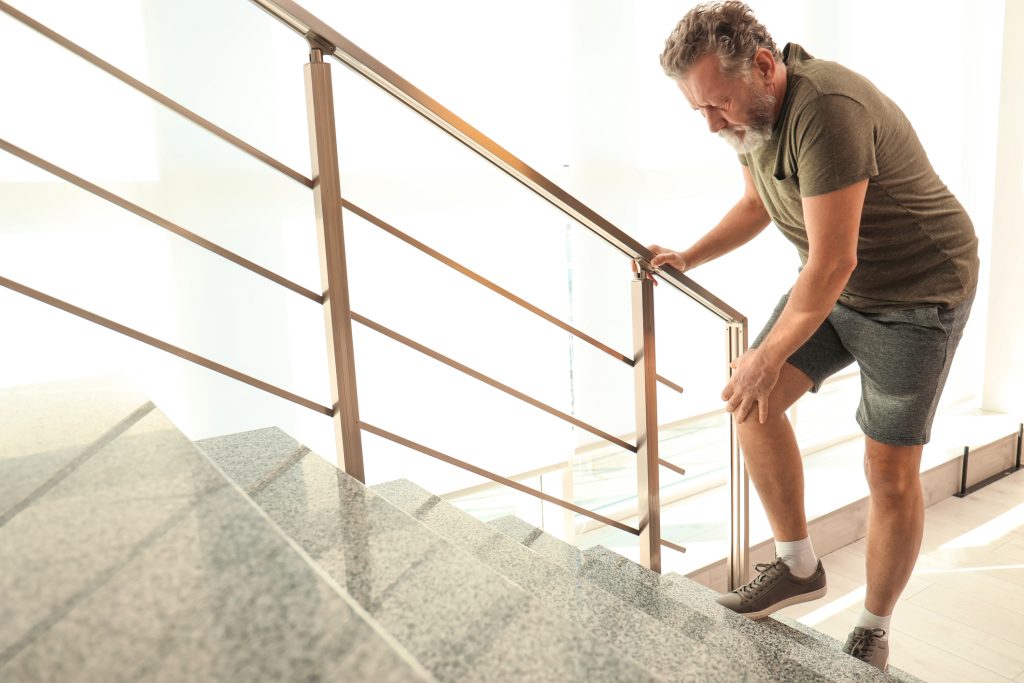
You can walk around at home or work with no problem. You've strolled through the park and nothing. Then you reach a flight of stairs, and after a few steps, your knee starts aching. Or maybe going up is fine, but coming back down really makes the pain noticeable.
What changes between walking on flat ground and using stairs?
Knee pain when going up or down stairs is common because stairs put more demand on your knees than walking on level ground. Your knees bend farther, your muscles work harder, and the joint has to support and control your body weight with every step. Research suggests forces through the patellofemoral joint, where your kneecap meets your thigh bone, can reach several times your body weight during stair climbing.[1]
But how your knee hurts can tell us a lot about what may be happening inside or around the joint.
Why Do Stairs Put So Much Stress on Your Knees?
Going upstairs requires your quadriceps to help straighten your knee and lift your body against gravity. Going downstairs presents a different challenge as your muscles help control your descent while the knee bends under load.[2]
That combination of knee flexion, muscle force and joint loading can expose a problem you barely notice during ordinary walking.
What Causes Knee Pain When Using Stairs?
Stair-related knee pain does not point to one specific diagnosis. Where you hurt, when the pain occurs and whether you have symptoms such as swelling, stiffness, catching, or instability (or a combination of those) can help narrow down the cause.
Here are some of the most common reasons stairs may trigger or worsen knee pain:
Patellofemoral Pain
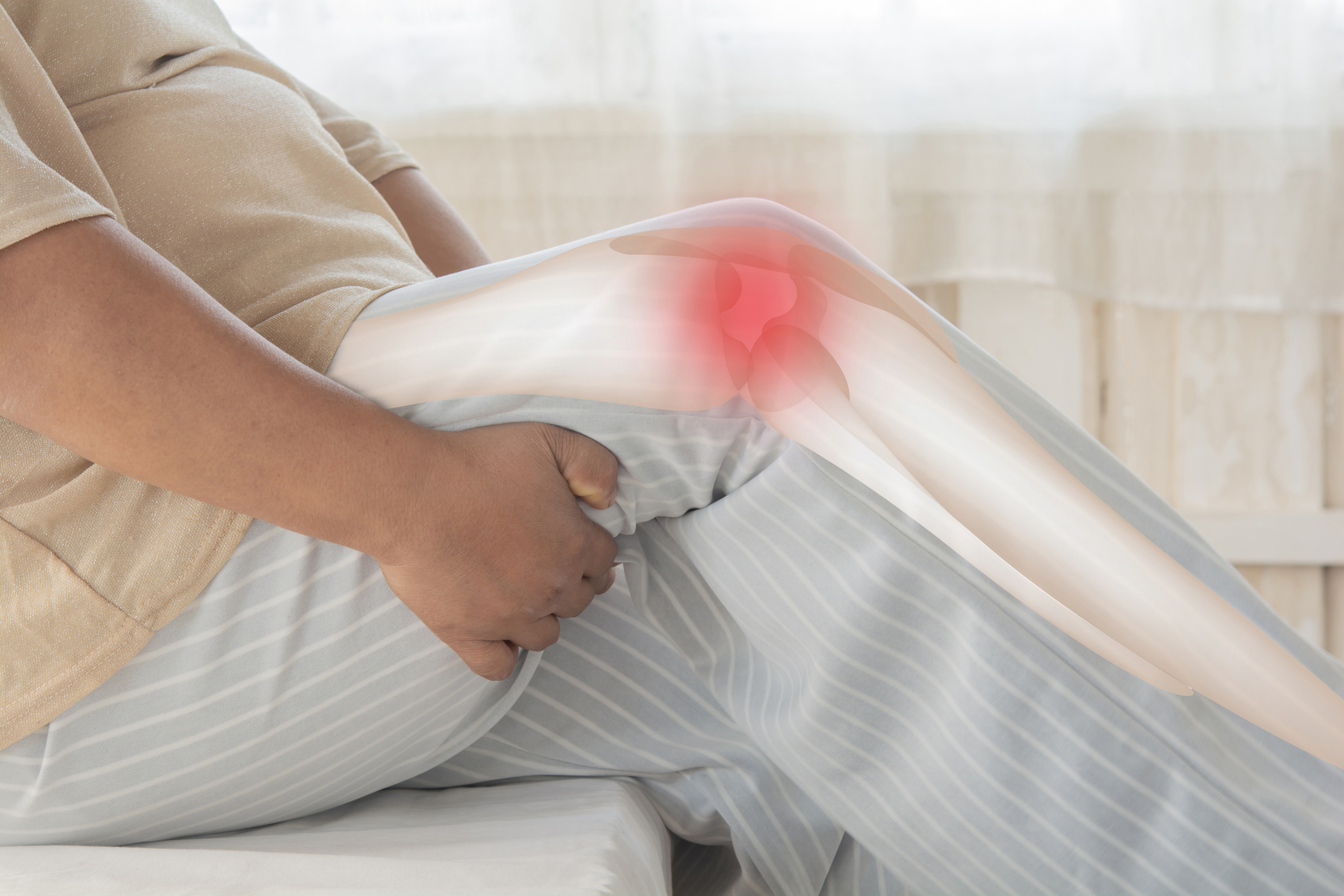
Patellofemoral pain syndrome, sometimes called runner's knee, commonly causes an ache around or behind the kneecap. Despite the nickname, you do not have to be a runner to develop it. Pain often increases with activities that repeatedly bend and load the knee, including squatting and climbing stairs, and it can be especially noticeable going downstairs.[3]
Tendon Irritation or Overuse
The quadriceps and patellar tendons help transfer the forces needed to straighten and control the knee. Repetitive loading or a sudden increase in activity can irritate these tissues. Patellar tendon pain is typically felt at the front of the knee, just below the kneecap, and activities such as climbing stairs or squatting can worsen it.[4]
Running, jumping, hills or suddenly adding more workouts, steps or stair climbing than your body is accustomed to may also contribute to overuse-related knee pain.[4]
Knee Osteoarthritis
Osteoarthritis is another common cause of knee pain, particularly as we get older. It occurs when cartilage within the joint gradually deteriorates, and symptoms can include pain, stiffness, swelling and decreased mobility.[5]
Because stair climbing places greater demands on the knee than level walking, people with knee osteoarthritis may find stairs difficult or painful even when walking on a flat surface is still relatively comfortable.[1, 6]
Meniscus, Ligament or IT Band Problems
A torn or irritated meniscus can cause pain that worsens with activities such as climbing stairs or standing up.[7] Symptoms may include pain along the inside or outside of the knee, swelling, catching, locking or a feeling that the knee may give way.[8]
Ligament injuries can also affect how stable the knee feels. An ACL injury, for example, may cause swelling, pain and a feeling of instability or "giving way."[9] An MCL injury typically causes pain and tenderness along the inside of the knee and may also make the knee feel unstable.[10]
Pain concentrated along the outside of the knee, especially in runners or other active adults, may involve the iliotibial (IT) band instead.[11]
Why Going Down Stairs Can Make Knee Pain Worse
There is a reason many people say, "Going up isn't so bad. It's coming down that hurts."
Descending stairs requires your leg muscles to control your body as your knee bends under load rather than simply propel you upward. That added demand can make existing irritation around the kneecap or other knee structures much easier to feel.[1, 2]
The knee does not work alone, either. Hip and leg strength and movement patterns can also affect how the knee functions during activities such as stair climbing.[12]
Let’s Take the Stairs: Ready to Tackle Knee Pain Step by Step?
If taking the stairs has become something you dread, avoiding them may not address the reason your knee hurts in the first place. Persistent or worsening knee pain deserves a closer look, particularly if your knee swells, locks, gives way or begins interfering with everyday activities. Severe pain after an injury, inability to bear weight, sudden swelling or an obvious deformity should be evaluated promptly.[5]
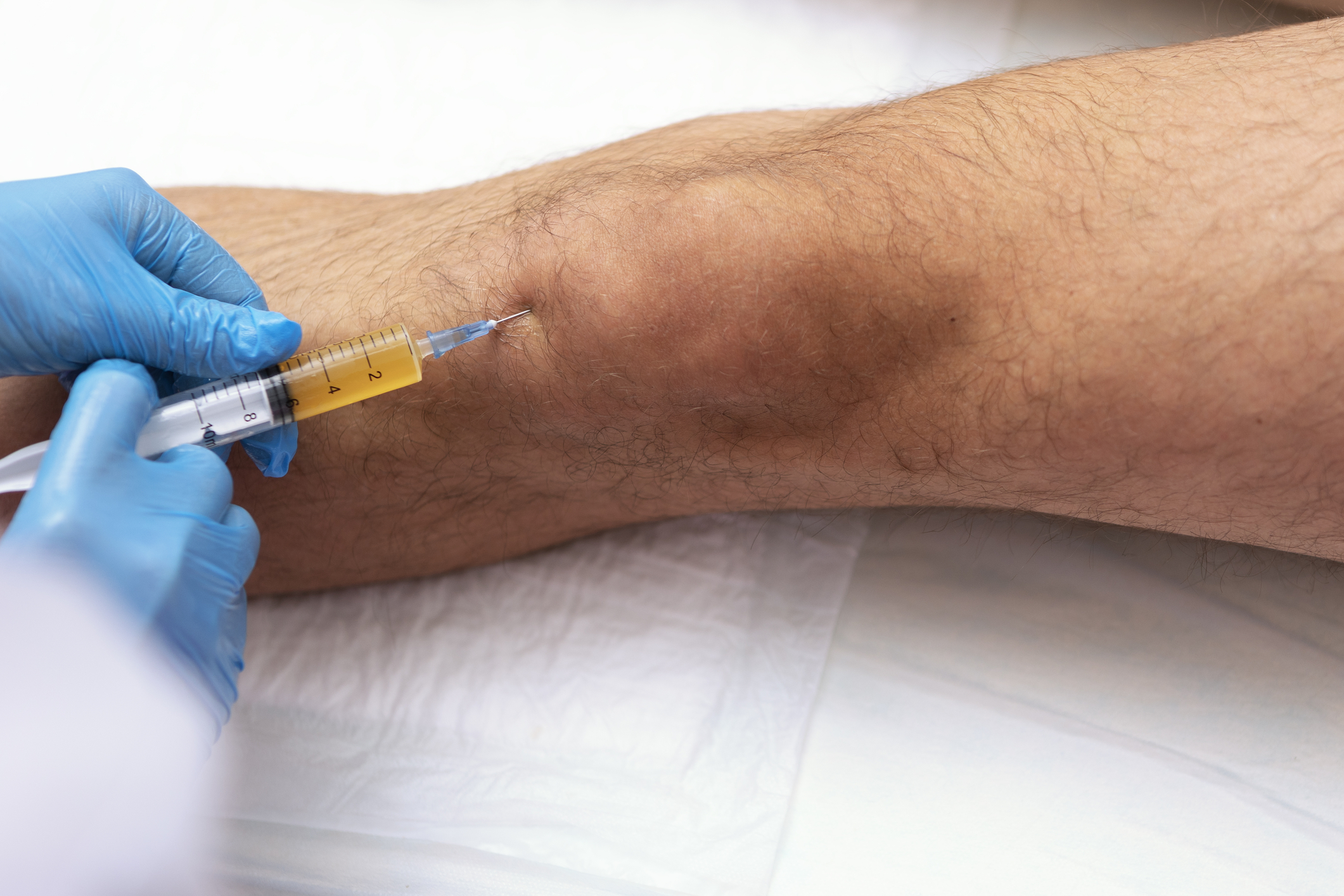
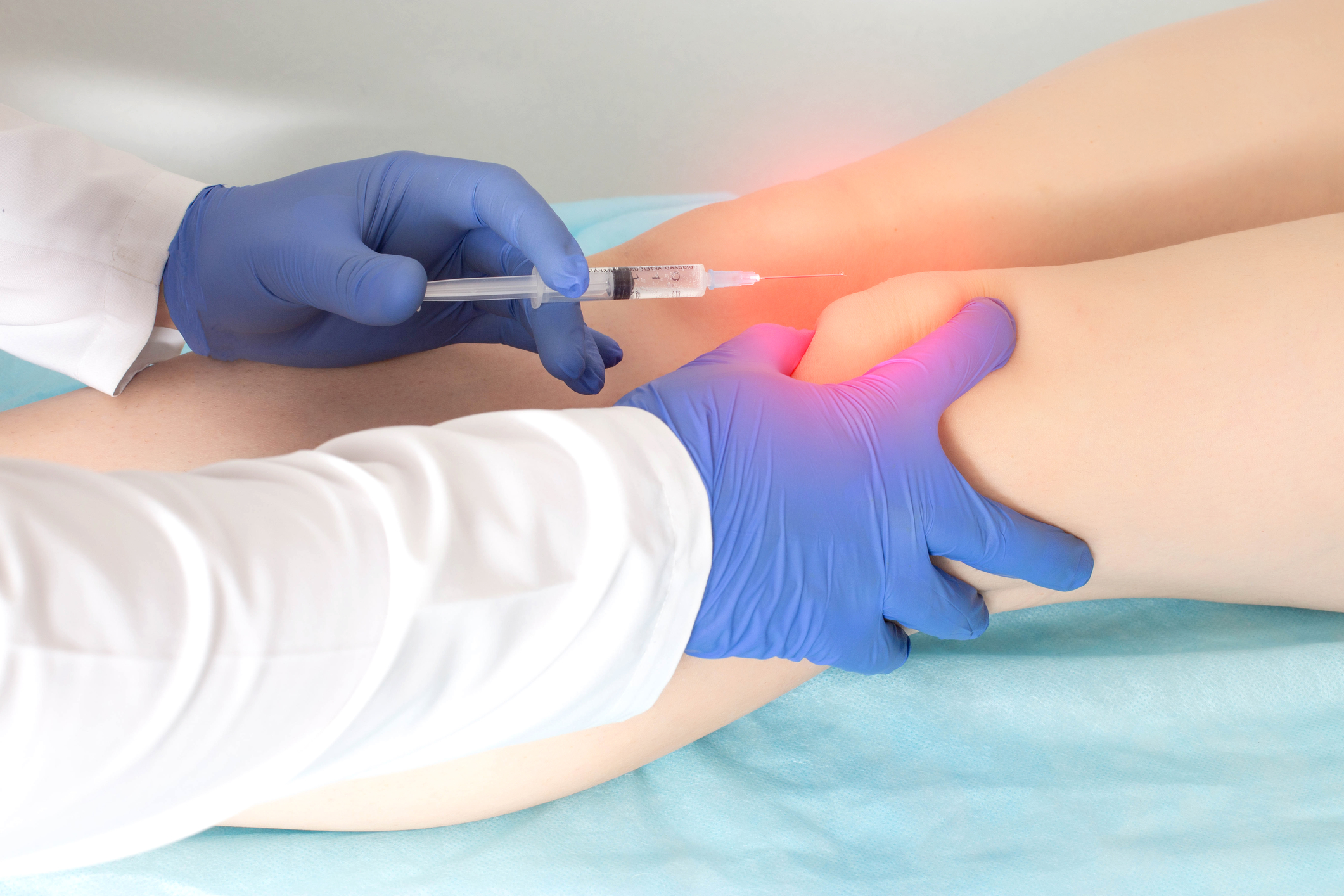
The right treatment depends on what is causing your pain. Treatment may include activity modification, physical therapy and targeted strengthening, medications or bracing. If conservative treatments don't provide enough relief, interventional pain management may offer additional nonsurgical options. Depending on the cause of your knee pain, these may include joint injections, hyaluronic acid injections, PRP therapy or nerve blocks.[13]
Finding the source of your knee pain is the first step toward choosing the right treatment, improving how your knee functions and making everyday activities easier. That includes taking the stairs without thinking twice about every step.
Disclaimer: This content is for educational purposes only and is not a substitute for medical advice, diagnosis, or treatment. Pain conditions and treatment options vary from person to person, so always talk with a qualified healthcare provider about what’s right for you. If you experience sudden or worsening pain, or symptoms like numbness, weakness, chest pain, shortness of breath, or changes in bladder or bowel control, seek medical care right away.
Resources
- Hart HF, Patterson BE, Crossley KM, Culvenor AG, Khan MCM, King MG, Sritharan P. May the force be with you: understanding how patellofemoral joint reaction force compares across different activities and physical interventions-a systematic review and meta-analysis. Br J Sports Med [Internet]. 2022 May;56(9):521-530. doi: 10.1136/bjsports-2021-104686. Epub 2022 Feb 3. PMID: 35115309. Accessed September 13, 2026. Available from: https://pubmed.ncbi.nlm.nih.gov/35115309/
- Wang X, Liu H, Dong Z, Chen X, Xu C, Ji G, Kang H, Wang F. Contact area and pressure changes of patellofemoral joint during stair ascent and stair descent. BMC Musculoskelet Disord [Internet]. 2023 Sep 28;24(1):767. doi: 10.1186/s12891-023-06882-0. PMID: 37770867; PMCID: PMC10537124. Accessed September 13, 2026. Available from: https://pmc.ncbi.nlm.nih.gov/articles/PMC10537124/
- Patellofemoral Pain Syndrome (PFPS). Cleveland Clinic [Internet]. Updated April 13, 2026. Accessed September 13, 2026. Available from: https://my.clevelandclinic.org/health/diseases/17914-patellofemoral-pain-syndrome-pfps
- Patellar Tendinitis (Jumper’s Knee). Cleveland Clinic [Internet]. Updated August 27, 2024. Accessed September 13, 2026. Available from: https://my.clevelandclinic.org/health/diseases/patellar-tendonitis-jumpers-knee
- Knee Pain – Symptoms & Causes. Cleveland Clinic [Internet]. Accessed September 13, 2026. Available from: https://www.mayoclinic.org/diseases-conditions/knee-pain/symptoms-causes/syc-20350849
- Ogawa A, Iijima H, Takahashi M. Identification of Early Knee Osteoarthritis Based on Knee Joint Trajectory during Stair Climbing. Int J Environ Res Public Health [Internet]. 2022 Nov 15;19(22):15023. doi: 10.3390/ijerph192215023. PMID: 36429742; PMCID: PMC9691255. Accessed September 13, 2026. Available from: https://pmc.ncbi.nlm.nih.gov/articles/PMC9691255/
- Meniscus tears & repairs – Symptoms. Mayo Clinic Orthopedics and Sport Medicine [Internet]. Accessed September 13, 2026. Available from: https://sportsmedicine.mayoclinic.org/condition/meniscus-tears-repairs/page/1
- Torn Meniscus – Symptoms & causes. Mayo Clinic [Internet]. Accessed September 13, 2026. Available from: https://www.mayoclinic.org/diseases-conditions/torn-meniscus/symptoms-causes/syc-20354818
- ACL Injury – Symptoms & Causes. Mayo Clinic [Internet]. Accessed September 13, 2026. Available from: https://www.mayoclinic.org/diseases-conditions/acl-injury/symptoms-causes/syc-20350738
- MCL Tear. Cleveland Clinic [Internet]. Accessed September 13, 2026. Available from: https://my.clevelandclinic.org/health/diseases/21979-mcl-tear
- Iliotibial Band Syndrome. Cleveland Clinic [Internet]. Accessed September 13, 2026. Available from: https://my.clevelandclinic.org/health/diseases/21967-iliotibial-band-syndrome
- Bolgla LA, Malone TR, Umberger BR, Uhl TL. Comparison of hip and knee strength and neuromuscular activity in subjects with and without patellofemoral pain syndrome. Int J Sports Phys Ther. 2011 Dec;6(4):285-96. PMID: 22163090; PMCID: PMC3230156. Accessed September 13, 2026. Available from: https://pmc.ncbi.nlm.nih.gov/articles/PMC3230156/
- Knee Pain: Causes, Treatment & Pain Relief. PainCare Florida [Internet]. Accessed September 13, 2026. Available from: https://paincareflorida.com/medical-pain-conditions/knee-pain/