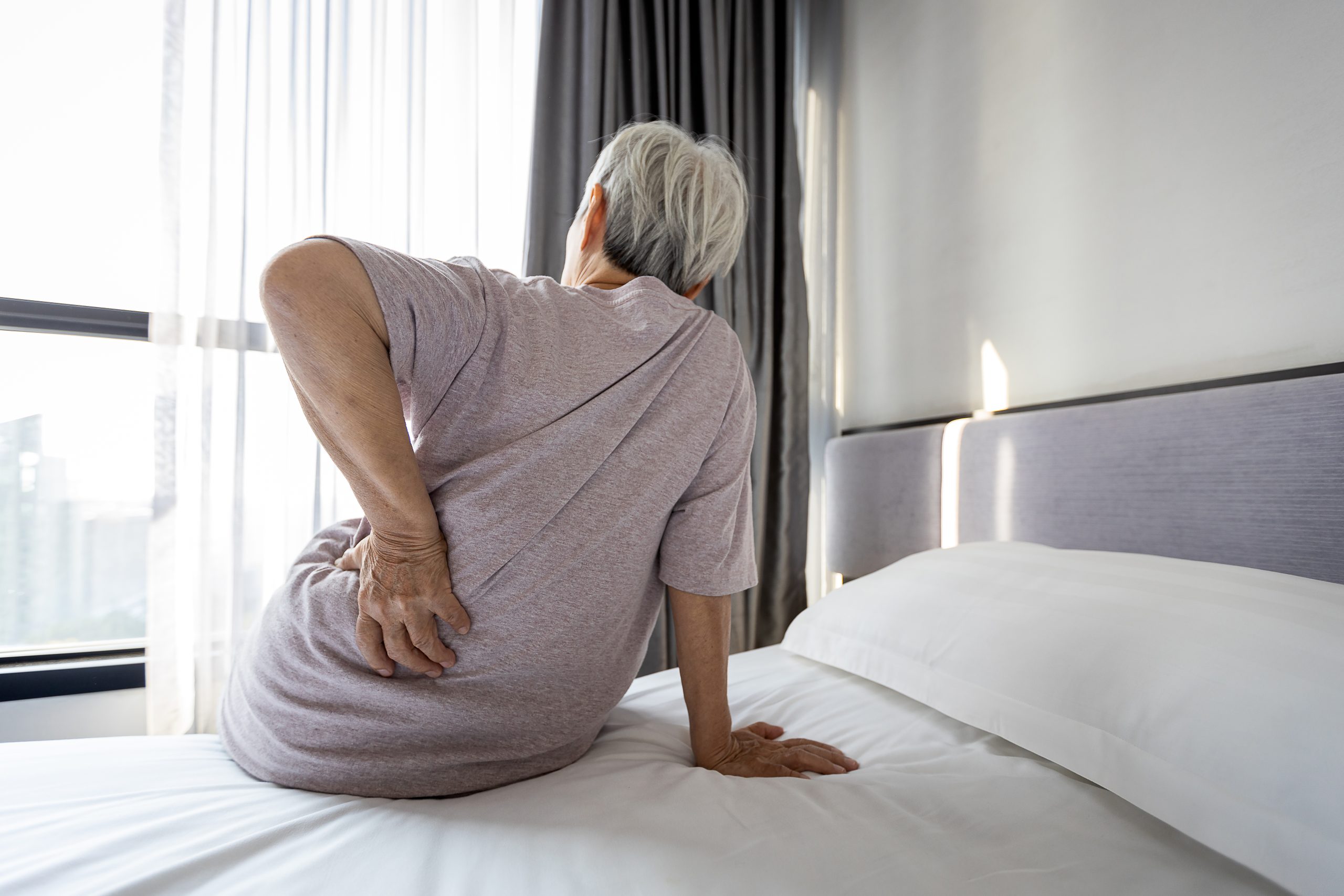

Is your pain so predictable it’s as if it has a schedule? You’re not imagining that your pain is flaring up at specific times of the day, like first thing in the morning or getting louder as the house gets quiet. Pain doesn’t just “happen”. There are real biological and practical reasons behind it.[1] One big reason is your body’s internal clock, or circadian rhythm, which affects pain sensitivity and inflammation at different times of day.[2]
Your hormones, sleep (or lack of), daytime busyness, the type of pain and related conditions all affect how and when you feel pain. Let’s talk about whether your pain worsens at sunrise or sunset (or both).
Morning Pain: Why You Wake Up Hurting
Many people with inflammatory or joint pain notice the worst symptoms first thing in the morning. That’s especially true for conditions like rheumatoid arthritis (RA) and similar autoimmune inflammatory diseases.[3] In RA and other inflammatory conditions, your immune system releases pro-inflammatory proteins late at night and early morning. The release occurs at the same time your body’s natural anti-inflammatory hormone (cortisol) is at its lowest. This sets the stage for stiffer, more painful joints when you first wake up.[4; 3]
Morning stiffness, where joints feel tight and hard to move, that lasts more than 30 minutes, is a classic symptom of inflammatory arthritis and a significant reason you may feel pain right when you get out of bed.[5] Conditions such as ankylosing spondylitis and psoriatic arthritis also trigger morning stiffness and pain due to inflammatory rhythms.[3]
Some degenerative joint conditions, such as osteoarthritis (OA), can also contribute to morning discomfort. In osteoarthritis, cartilage breakdown and joint stress can make stiffness and soreness most noticeable right after inactivity, such as sleep, but before moving around loosens things up.[6]
Why Pain Can Get Worse at Night
You might also notice pain ramping up in the evening or while trying to sleep. This isn’t “just in your head”; several factors make this real [7; 8]:
- Your body’s cortisol levels naturally dip in the evening, which means your own anti-inflammatory defenses are less active as night approaches.[8]
- Pain sensitivity itself follows a rhythm. Many people (with and without chronic conditions) are more pain sensitive in the late afternoon and night.[7]
- Lack of movement and distraction at night can make pain feel louder: moving during the day distracts your brain and stimulates nerves in ways that “close the gate” to pain signals, whereas lying still makes those signals easier to notice.[9]
- Some nerve-related pain conditions, especially neuropathic pain like diabetic neuropathy, postherpetic neuralgia, or nerve compression pain, are significantly worse at night than in the morning in clinical studies.[10]
Conditions like fibromyalgia may also follow a diurnal rhythm where pain is slightly more intense in the evening, highlighting that different pain mechanisms can peak at different times of day.[11]
Conditions Linked to Pain Level Changes Depending on the Time of Day
Pain doesn’t flare randomly — many chronic pain conditions follow predictable daily patterns tied to the body’s circadian rhythm, which influences pain sensitivity, inflammation, and nervous system activity throughout the day.[1] Hormone fluctuations, particularly changes in cortisol levels overnight and in the early morning, can intensify inflammation and pain signals at certain times.[8; 12] Sleep quality, prolonged inactivity, body position, and daytime mechanical stress on joints and nerves also affect when pain feels most severe.[7; 13] Understanding these timing patterns can provide important clues about the underlying cause of pain and help guide more targeted treatment approaches.[2]
Here are some common pain conditions that are affected by the time of day:
Pain Commonly Worse in the Morning
- Rheumatoid arthritis (RA) [4]
- Ankylosing spondylitis and other inflammatory arthritis [3]
- Psoriatic arthritis [14]
- Osteoarthritis (especially spine, hips, knees) [6]
- Facet joint syndrome [15]
- Sacroiliac (SI) joint dysfunction [16]
- Adhesive capsulitis (frozen shoulder)
- Tendinitis and bursitis
- Plantar fasciitis [17]
- Inflammatory back pain [18]
- Post-surgical pain [1]
Pain Commonly Worse in the Evening or During the Night
- Neuropathic pain (nerve pain) [10]
- Diabetic peripheral neuropathy[10]
- Radiculopathy (cervical or lumbar nerve root pain)
- Sciatica [2]
- Postherpetic neuralgia [1]
- Migraines and cluster headaches [1]
- Complex regional pain syndrome (CRPS) [19]
- Spinal stenosis (position-dependent night pain) [20]
- Chronic neck pain
- Chronic low back pain after daily loading [21]
- Chemo or cancer-related pain [2]
Pain That Can Be Worse Both Morning and Night
- Fibromyalgia [11]
- Degenerative disc disease [13]
- Chronic low back pain
- Cervical spine disorders
- Lumbar spine disorders [1]
- Myofascial pain syndrome [22]
- Failed back surgery syndrome (FBSS) [23]
- Chronic joint pain [24]
- Chronic musculoskeletal pain [24]
- Chronic post-traumatic pain [24]
Ready for a Different Approach? Talk With a Pain Specialist Who Prioritizes Safer, Long-Term Relief
If your pain follows a pattern — like always worse in the morning or at night — that’s actually useful information for planning your care. Changing sleep habits, bed setup, and exercise or stretching routines can help many people reduce stiffness and pain.
Keeping a simple pain journal and noting the time of day your pain peaks, what makes it better or worse, and how it affects sleep or movement, can reveal patterns that guide treatment decisions. Working with a pain specialist allows care to be tailored to when your pain is worst, since medications, injections, and therapies can be timed strategically to match your body’s rhythms.
If daily pain patterns are controlling your schedule, it may be time to take back control with a personalized pain management plan.
Disclaimer: This blog is for educational purposes only and should not replace professional medical advice, diagnosis, or treatment. If you experience sudden, severe, or worsening pain, especially if it’s accompanied by symptoms like fever, numbness, weakness, shortness of breath, chest pain, or loss of bladder or bowel control, seek immediate medical care. Don’t wait for your next pain management appointment.
Resources:
- Knezevic NN, Nader A, Pirvulescu I, Pynadath A, Rahavard BB, Candido KD. Circadian pain patterns in human pain conditions – A systematic review. Pain Pract [Internet]. 2023;23(1):94-109. doi:10.1111/papr.13149 Accessed December 12, 2025. Available from: https://pmc.ncbi.nlm.nih.gov/articles/PMC10086940/
- Huang ZQ, Li XQ, Wang YD, et al. Circadian Rhythms and Pain: A Narrative Review on Clock Genes and Circadian-Based Interventions. J Pain Res [Internet]. 2025;18:4687-4698. Published 2025 Sep 9. doi:10.2147/JPR.S533508 Accessed December 12, 2025. Available from: https://pmc.ncbi.nlm.nih.gov/articles/PMC12433206/
- Rath L. Perfect Timing: Circadian Rhythms, Your Health and Your Arthritis. Arthritis Foundation [Internet]. Published July 07, 2023. Accessed December 12, 2025. Available from: https://www.arthritis.org/health-wellness/about-arthritis/understanding-arthritis/circadian-rhythms-and-arthritis
- Cutolo M, Masi AT. Circadian rhythms and arthritis. Rheum Dis Clin North Am [Internet]. 2005 Feb;31(1):115-29, ix-x. doi: 10.1016/j.rdc.2004.09.005. PMID: 15639059. Accessed December 12, 2025. Available from: https://pubmed.ncbi.nlm.nih.gov/15639059/
- Mayer Robinson K. How to Beat Morning Pain From Rheumatoid Arthritis. WebMD [Internet]. Reviewed September 06, 2024. Accessed December 12, 2025. Available from: https://www.webmd.com/rheumatoid-arthritis/ra-morning-pain
- Osteoarthritis: MedlinePlus Medical Encyclopedia [Internet]. Accessed December 12, 2025. Available from: https://medlineplus.gov/ency/article/000423.htm
- Radcliffe S. Why Pain Levels Get Worse or Better Depending on Time of Day. Healthline [Internet]. Published July 12, 2019. Accessed December 12, 2025. Available from: https://www.healthline.com/health-news/this-is-the-worst-time-of-day-for-pain-sensitivity
- Solan M. Do we feel more pain at night? Harvard Health Publishing [Internet]. Published January 18, 2023. Accessed December 12, 2025. Available from: https://www.health.harvard.edu/blog/do-we-feel-pain-more-at-night-202301182877
- Farhad K. Why is Neuropathy Worse at Night? Mass General Brigham [Internet]. Published May 23, 2025. Accessed December 12, 2025. Available from: https://www.massgeneralbrigham.org/en/about/newsroom/articles/why-your-neuropathy-is-worse-at-night
- Gilron I, Bailey JM, Vandenkerkhof EG. Chronobiological characteristics of neuropathic pain: clinical predictors of diurnal pain rhythmicity. Clin J Pain [Internet]. 2013 Sep;29(9):755-9. doi: 10.1097/AJP.0b013e318275f287. PMID: 23370066. Accessed December 12, 2025. Available from: https://pubmed.ncbi.nlm.nih.gov/23370066/
- Navarro R, Hopman W, Gilron I. Pain chronobiology in clinical trial participants with fibromyalgia: a comparison with neuropathic pain. PAIN Reports [Internet]. 10(4):p e1307, August 2025. | DOI: 10.1097/PR9.0000000000001307. Accessed December 12, 2025. Available from: https://journals.lww.com/painrpts/fulltext/2025/08000/pain_chronobiology_in_clinical_trial_participants.18.aspx
- Bumgarner JR, Walker WH 2nd, Nelson RJ. Circadian rhythms and pain. Neurosci Biobehav Rev [Internet]. 2021;129:296-306. doi:10.1016/j.neubiorev.2021.08.004 Accessed December 12, 2025. Available from: https://pmc.ncbi.nlm.nih.gov/articles/PMC8429267/
- Why Your Lower Back Pain Is Worse in the Morning (and What To Do About It). Cleveland Clinic. Published January 15, 2025. Accessed December 12, 2025. Available from: https://health.clevelandclinic.org/lower-back-pain-in-the-morning
- Leicht L. 11 Ways to Combat PsA Morning Stiffness. HealthCentral [Internet]. Updated November 21, 2024. Accessed December 12, 2025. Available from: https://www.healthcentral.com/condition/psoriatic-arthritis/10-ways-to-combat-psa-morning-stiffness
- Perolat R, Kastler A, Nicot B, et al. Facet joint syndrome: from diagnosis to interventional management. Insights Imaging [Internet]. 2018;9(5):773-789. doi:10.1007/s13244-018-0638-x. Accessed December 12, 2025. Available from: https://pmc.ncbi.nlm.nih.gov/articles/PMC6206372/
- Sacroiliitis. Cleveland Clinic [Internet]. Accessed December 12, 2025. Available from: https://my.clevelandclinic.org/health/diseases/17736-sacroiliitis
- Understanding Plantar Fasciitis: A Guide To Relief And Recovery. Physio Ed [Internet]. Published October 22, 2024. Accessed December 12, 2025. Available from: https://physioed.com/health-advice/orthopedic/foot-and-ankle/plantar-fasciitis/
- Lassiter W, Bhutta BS, Allam AE. Inflammatory Back Pain. [Updated 2024 Feb 26]. In: StatPearls [Internet]. Treasure Island (FL): StatPearls Publishing; 2025 Jan-. Accessed December 12, 2025. Available from: https://www.ncbi.nlm.nih.gov/books/NBK539753/
- How To Sleep Better When You Have CRPS or Chronic Pain. Burning Nights [Internet]. Published 2023. Accessed December 12, 2025. Available from: https://www.burningnightscrps.org/support/news-and-blog/article/sleep-better-crps-chronic-pain/
- Papavero L, Wilke J, Ali N, Schawjinski K, Holtdirk A, Schoeller K. Lumbar spinal stenosis and surgical decompression affect sleep quality and position in patients. A prospective cross-sectional cohort study. Brain and Spine [Internet]. 2024;4:102785. doi:https://doi.org/10.1016/j.bas.2024.102785. Accessed December 12, 2025. Available from: https://www.sciencedirect.com/science/article/pii/S2772529424000419
- Labrecque G, Vanier MC. Biological rhythms in pain and in the effects of opioid analgesics. Pharmacol Ther [Internet]. 1995;68(1):129-47. doi: 10.1016/0163-7258(95)02003-9. PMID: 8604435. Accessed December 12, 2025. Available from: https://pubmed.ncbi.nlm.nih.gov/8604435/
- Dua A, Chang KV. Myofascial Pain Syndrome. [Updated 2025 Apr 13]. In: StatPearls [Internet]. Treasure Island (FL): StatPearls Publishing; 2025 Jan-. Accessed December 12, 2025. Available from: https://www.ncbi.nlm.nih.gov/books/NBK499882/
- Yun SY, Kim DH, Do HY, Kim SH. Clinical insomnia and associated factors in failed back surgery syndrome: a retrospective cross-sectional study. Int J Med Sci [Internet]. 2017; 14(6):536-542. doi:10.7150/ijms 18926. Accessed December 12, 2025. Available from: https://www.medsci.org/v14p0536.htm
- Tanaka Y, Shigetoh H, Sato G, et al. Classification of circadian pain rhythms and pain characteristics in chronic pain patients: An observational study. Medicine (Baltimore) [Internet]. 2021;100(25):e26500. doi:10.1097/MD.0000000000026500. Accessed December 12, 2025. Available from: https://pmc.ncbi.nlm.nih.gov/articles/PMC8238338/