
Stem Cell Therapy
Pain Treatment Procedure
Stem Cell Therapy
Stem cell therapy, also known as stem cell transplants, is a revolutionary treatment that utilizes the body’s own regenerative cells to repair damaged tissues, reduce inflammation, and alleviate pain. These remarkable cells serve as the building blocks and foundation for all other cell types, making them the powerhouse of regenerative medicine.[1] These versatile cells possess the ability to become any cell type your body needs, such as musculoskeletal, nerve, or blood cells.
A stem cell transplant harnesses your body’s natural healing power to regenerate new cells, restoring the damage caused by neuropathy, soft tissue injury, or degenerative diseases like arthritis.[2] Their role in pain management is to encourage the repair and regeneration process at a cellular level for injured or degenerated tissue by reducing inflammation and releasing growth factors to accelerate the healing process.[3]
How Stem Cell Therapy Works
Stem cell therapy offers a promising alternative to conventional pain management by utilizing the body’s cellular building blocks. [4] The process typically begins with harvesting stem cells from various sources, often from the bone marrow or adipose tissue (also known as fat). [5] These cells are then processed to enhance their regenerative properties and therapeutic efficacy. Once prepared, they are combined with platelet-rich plasma (PRP) or saline before being injected into the affected area.
Once introduced, stem cells can divide and replicate themselves, but most importantly, they can differentiate into the exact types of cells your body needs to repair damaged tissues. [6] They also release growth factors and anti-inflammatory agents that promote healing by stimulating tissue regeneration, addressing the underlying causes of pain, and reducing inflammation—all working together to provide lasting relief from chronic pain.[4]
PRP and stem cell therapy are the cellular therapy powerhouses of regeneration medicine. Stem cell therapy introduces cells that can divide and develop into new tissue, aiding repair in damaged cartilage, muscles, or nerves. [13; 7] Platelet-rich plasma is used to treat musculoskeletal conditions. PRP uses your blood for a concentrated platelet serum containing growth factors that help speed up healing and reduce pain and inflammation.[7]
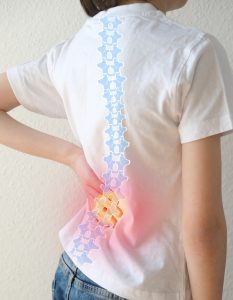
To put it simply, if you’re suffering from degenerative disc disease, stem cells can help restore the disc’s composition by replenishing lost or damaged cells. They can also minimize the inflammatory response, which may reduce your chronic back pain.
Conditions Treated with Stem Cells
Stem cell therapy has been used to treat diseases and disorders like leukemia, sickle cell anemia and non-Hodgkin lymphoma.[2] Researchers are exploring their ability to treat Type 1 Diabetes, Parkinson’s, heart failure, osteoarthritis, as well as other conditions.[2]
Pain management specialists and sports medicine doctors also treat the following conditions with stem cell transplants:
- Complex regional pain syndrome (CRPS) [7]
- Broken bones [2]
- Sports injuries [8]
- Neuropathic pain (nerve pain) [4]
- Discogenic back [4]
- Osteoarthritis [4]
- Musculoskeletal pain [4]
- Degenerative joint diseases [4]
- Intervertebral disc disease (IVD) [4]
- Trigeminal neuralgia [4]
- Radiculopathy [4]
- Peripheral nerve injury [4]
- Postherpetic neuralgia [4]
- Multiple sclerosis (MS) [4]
- Spinal cord injury [4]
- Diabetic neuropathy [4]
- Connective tissue injuries (tendon, ligament, and cartilage) [4]
- Chronic patellar tendinopathy [4]
- Rheumatoid arthritis
- Tendinitis [1]
- ACL tears [1]
- Achilles tendon [9]
Benefits of Stem Cell Transplants
If you’re on the fence about stem cell therapy, this innovative procedure offers several advantages over traditional treatments, including:
- Minimally Invasive: The procedure involves injections rather than surgery, reducing recovery time and associated risks.[5]
- Natural Healing: Utilizing your body’s own cells encourages natural tissue repair mechanisms and cell regeneration.
- Reduced Recovery Time: Many patients return to normal activities within days or weeks, depending on the condition treated.[5]
- Long-Term Pain Relief: Stem cell therapy can provide lasting relief by addressing the underlying cause of pain.
- Versatility: Stem cell therapy can help treat a wide range of diseases and conditions, including blood cancers, immune disorders, sports injuries, and degenerative conditions.[5]
Consult a Stem Cell Therapy Specialist for Pain Management
Is stem cell therapy the solution you’ve been waiting for? Possibly! Determining if this biological therapy is right for you starts by consulting with a pain management specialist. They’ll assess your condition and medical history before moving forward. Pain clinics specializing in regenerative medicine can provide expert guidance and create a personalized treatment plan that utilizes other interventions, such as PRP therapy, nerve blocks, or joint injections, to optimize your healing journey and increase pain relief.
Stem cell therapy can also benefit athletes and active individuals seeking to recover quickly from sports injuries, such as ligament tears, tendon damage, and muscle injuries. Studies suggest that stem cell treatments can aid in sports injury recovery by promoting tissue regeneration and reducing inflammation, thereby helping athletes return to peak performance more quickly. [10]
If chronic pain or injury is holding you back, there is no better time to explore cutting-edge treatments like stem cell therapy. Contact your pain management physician today to learn about your options and take a massive step towards long-term relief and a more active, pain-free life.






Resources:
- What do Athletes Need to Know about Stem Cell Therapies? U.S. Anti-Doping Agency (USADA) [Internet]. Published August 16, 2016. Accessed March 31, 2025. Available from: https://www.usada.org/spirit-of-sport/what-do-athletes-need-to-know-about-stem-cell-therapies/
- Stem Cells. Cleveland Clinic [Internet]. Accessed March 31, 2025. Available from: https://my.clevelandclinic.org/health/body/24892-stem-cells
- Goswami G. Does Stem Cell Therapy Work? Sports-Health [Internet]. Updated April 13, 2017. Accessed March 31, 2025. Available from: https://www.sports-health.com/treatment/regenerative-medicine/does-stem-cell-therapy-work
- Padda J, Khalid K, Zubair U, et al. Stem Cell Therapy and Its Significance in Pain Management. Cureus [Internet]. 2021;13(8):e17258. Published 2021 Aug 17. doi:10.7759/cureus.17258 https://pmc.ncbi.nlm.nih.gov/articles/PMC8445610/
- Cona LA. Stem Cell Therapy for Pain: An In-Depth Look. DVC Stem [Internet]. Updated April 11, 2024. Accessed March 31, 2025. Available from: https://www.dvcstem.com/post/stem-cell-therapy-for-pain
- Han YH, Kim KH, Abdi S, Kim TK. Stem Cell Therapy in Pain Medicine. The Korean Journal of Pain [Internet]. Published October 01, 2019. https://doi.org/10.3344/kjp.2019.32.4.245. Accessed March 31, 2025. Available from: https://www.epain.org/journal/view.html?doi=10.3344/kjp.2019.32.4.245
- Cleveland Clinic Studying Stem Cell Treatment for Complex Regional Pain Syndrome. Cleveland Clinic [Internet]. Published December 14, 2022. Accessed March 31, 2025. Available from: https://newsroom.clevelandclinic.org/2022/12/14/cleveland-clinic-studying-stem-cell-treatment-for-complex-regional-pain-syndrome
- Rahim S, Rahim F, Shirbandi K, Haghighi BB, Arjmand B. Sports Injuries: Diagnosis, Prevention, Stem Cell Therapy, and Medical Sport Strategy. Adv Exp Med Biol [Internet]. 2019;1084:129-144. doi:10.1007/5584_2018_298. Accessed March 31, 2025. Available from: https://pubmed.ncbi.nlm.nih.gov/30539427
- Goswami G. Stem Cell Therapy for Sports Injuries. Sports-Health [Internet]. Updated April 13, 2017. Accessed March 31, 2025. Available from: https://www.sports-health.com/treatment/regenerative-medicine/stem-cell-therapy-sports-injuries
- Bingnan W, Jiao T, Ghorbani A, Baghei Sh. Enhancing regenerative potential: A comprehensive review of stem cell transplantation for sports-related neuronal injuries, with a focus on spinal cord injuries and peripheral nervous system damage. Tissue and Cell [Internet]. 2024; 88(102429). ISSN 0040-8166. https://doi.org/10.1016/j.tice.2024.102429. Accessed March 31, 2025. Available from: https://www.sciencedirect.com/science/article/abs/pii/S0040816624001307