
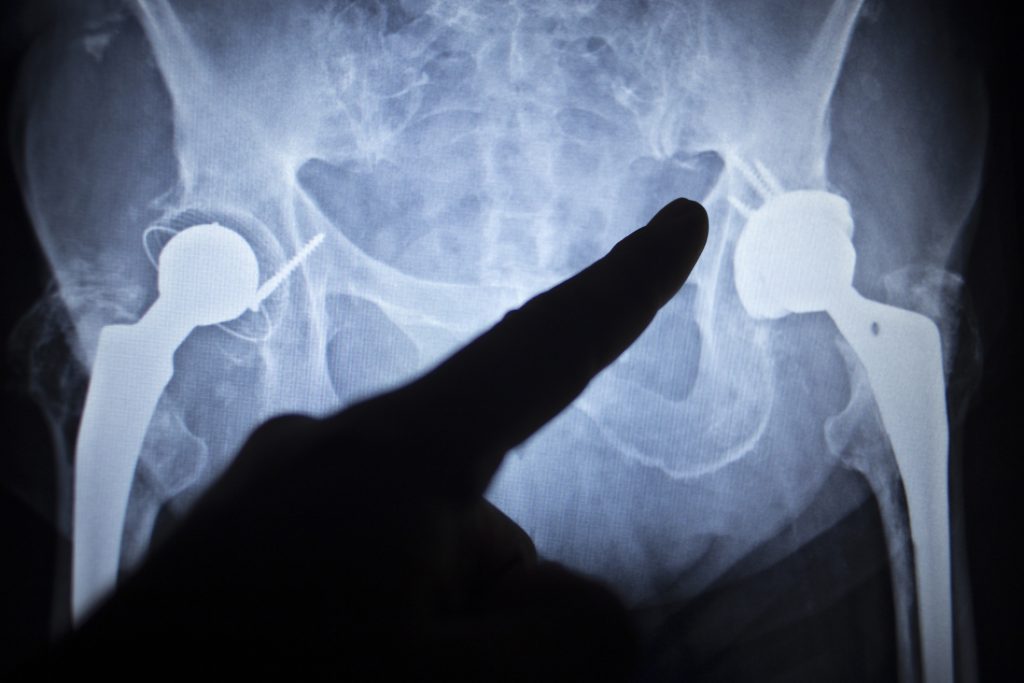
If you’ve reached the point of needing hip replacement surgery, you’ve likely experienced significant pain that has limited your daily activities. You’ve tried medication, physical therapy and lifestyle changes with little to no pain improvement and undergoing hip surgery was a last resort when conservative pain relief measures failed. The excellent news is arthroplasty can dramatically improve your quality of life once you recover. Effective pain management is crucial for a smooth and successful recovery.
We’ll guide you through how to manage pain following your hip replacement surgery so you remain comfortable and recover without complications.
Arthroplasty Postoperative Pain Management
Traditionally, pain relief is delivered through IV or injectable pain medications and anti-inflammatories. For pain relief with less medication, less post-anesthesia-related confusion and better pain control than systemic analgesia, nerve blocks are an excellent option.[1] Controlling hip surgery pain with nerve blocks increases comfort levels, allowing patients to go home sooner and improve rehabilitation outcomes.[1]
Effective Pain Relief Strategies After Hip Replacement Surgery
As you prepare to go home, you’ll likely receive prescription oral pain medications. You’ll also receive instructions for post-operative care, activity restrictions and exercises to continue your recovery at home.
The days following your surgery will be the most challenging in terms of pain, but there are at-home strategies for effective pain management:
Medication Management
Take your prescription and OTC (over-the-counter) pain relief medications on time to reduce breakthrough pain.
RICE Method: Rest, Ice, Compression, Elevation
Your doctor may prescribe the RICE method to reduce pain and swelling without medication. According to WebMD, this is “just what the doctor ordered” after hip surgery:
- Rest: While you may still move around, your activity is limited. Rest when you’re tired or feel discomfort or pain. Rest after home exercise or therapy. You may even incorporate relaxation techniques like journaling, meditation or breath work.
- Ice: Icing your surgical site can help reduce inflammation, swelling and pain, but don’t overdo it! Use ice packs or cold therapy machines for about 20-30 minutes, and allow at least 30 minutes before reapplying to prevent damage to your skin.
- Compression: Use a compression dressing such as compression stockings or wraps. It should be snug but not tight enough to restrict blood flow. If your limb feels tingly or numb, loosen your dressing. If symptoms don’t improve, seek immediate medical attention.
- Elevation: Lie comfortably and prop your leg up with a pillow or soft blanket. For best results, elevate your foot above your heart.
Assistive Devices
At the beginning of recovery, your doctor may provide crutches, a cane or a walker to minimize weight bearing on your new joint, making recovery more comfortable.[2]
Healthy Lifestyle Changes
Stay hydrated and eat well-balanced meals to support the recovery process and help you feel better. Maintain a healthy weight to help relieve strain on your new hip.[2]
Post-Hip Replacement Rehabilitation
Physical activity plays a significant role in your recovery process after your hip replacement surgery. It helps manage pain while allowing you to regain strength and mobility. You’ll receive physical therapy sessions designed to strengthen the muscles around your new hip joint. Continuing these exercises at home will keep your hip strong and moveable. You can gradually increase your activity level as you heal and strengthen your new hip.
Alternative Pain Management Techniques
While conventional pain relief methods work for some, there are drug-free alternatives that can help manage pain, increase mobility and improve your well-being:
- Acupuncture: Stimulates specific points on your body to relieve pain and encourage healing.[3]
- Massage Therapy: Eases muscle tension, improves blood flow and encourages lymphatic drainage.[4]
- Transcutaneous Electrical Nerve Stimulation (TENS): TENS is non-invasive and uses electrical pulses to relieve post-operative pain.[5]
- Nerve Blocks: An injection near your femoral nerve prevents postoperative pain signals from reaching your brain.[6]
When to Seek Interventional Pain Management Care for Hip Surgery Pain
While most patients recover well with the standard pain management protocol they are discharged with, some may experience persistent pain that requires further intervention. If you’ve had hip surgery and find that your pain is not well controlled or it’s interfering with your recovery and mobility, it may be time to find a pain management clinic. Pain management specialists can offer advanced treatment options that your surgeon or orthopedic may not, such as corticosteroid injections, nerve blocks, or other minimally invasive procedures to help control pain and improve your quality of life.
Receiving from hip replacement surgery is a journey, and effective pain management plays a significant role in ensuring a successful recovery and return to daily activities. Always communicate honestly with your healthcare team about your pain levels to ensure you receive the proper treatment for the best outcome.
Resources:
- Guay J, Johnson RL, Kopp S. Nerve blocks or no nerve blocks for pain control after elective hip replacement (arthroplasty) surgery in adults. Cochrane Database of Systematic Reviews. Published online October 31, 2017. Accessed June 28, 2024. doi:https://doi.org/10.1002/14651858.cd011608.pub2 Available from: https://www.ncbi.nlm.nih.gov/pmc/articles/PMC6485776
- Cafferky N. Managing Pain and Discomfort: Pain Relief Strategies After Total Hip Surgery. Dr. Nathan Cafferky [Internet]. Accessed June 28, 2024. Available from: https://www.nathancafferkymd.com/total-joints-blog/pain-relief-strategies-after-total-hip-joint-surgery
- Kwon S, Jin C, Jeong A, Yang SB. Effects of acupuncture on postoperative recovery and extubation time. Medicine [Internet]. 2021;100(4):e24502. Accessed June 28, 2024. doi:https://doi.org/10.1097/md.0000000000024502 Available from: https://www.ncbi.nlm.nih.gov/pmc/articles/PMC7850765/
- Hendershot S. Massage Post Joint Replacement Surgery | Massage Therapy Journal. American Massage Therapy Association [Internet]. Published February 1, 2022. Accessed June 28, 2024. Available from: https://www.amtamassage.org/publications/massage-therapy-journal/massage-post-joint-replacement/
- Kerai S, Saxena K, Taneja B, Sehrawat L. Role of transcutaneous electrical nerve stimulation in postoperative analgesia. Indian Journal of Anaesthesia [Internet]. 2014;58(4):388. Accessed June 28, 2024.doi:https://doi.org/10.4103/0019-5049.138966 Available from: https://www.ncbi.nlm.nih.gov/pmc/articles/PMC4155281/
- Femoral Nerve Block. Cleveland Clinic [Internet]. Accessed June 238, 2024. Available from: https://my.clevelandclinic.org/health/treatments/24916-femoral-nerve-block