
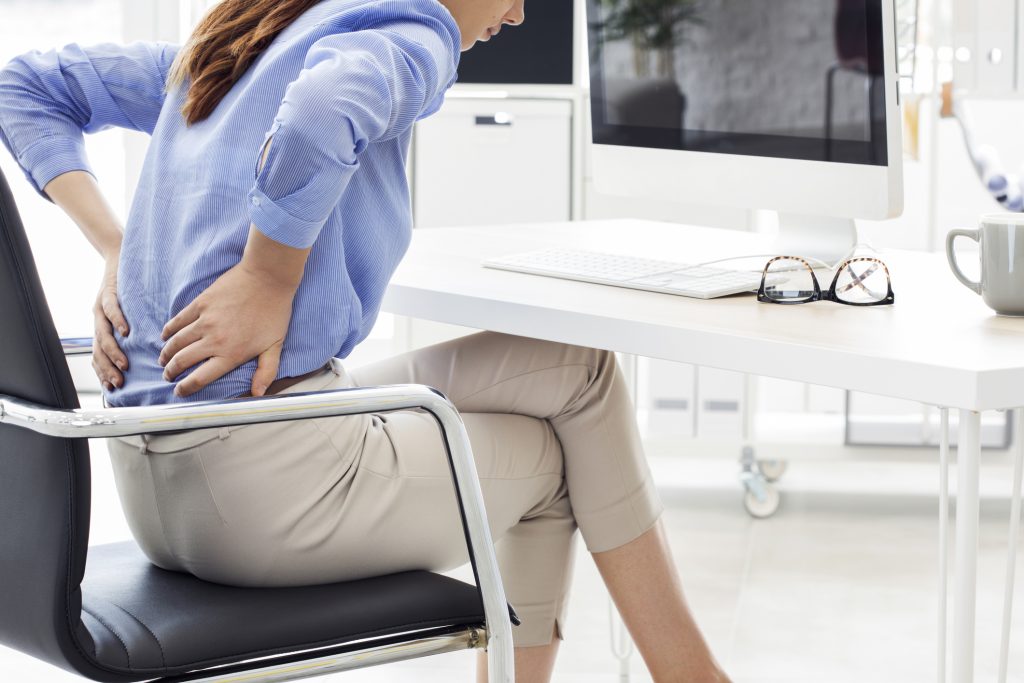
Be honest, are you sitting down while reading this? If so, you’re in good company! Most of us spend hours every day sitting in front of a computer, commuting in a car, or just relaxing on the couch. Add up all that derriere time, and it’s not unusual to spend 10 to 12 hours sitting daily.
The problem with prolonged sitting is that it can exacerbate chronic pain conditions, particularly in the back, neck, hips, knees, and legs. It can also increase stiffness, swelling, numbness, and fatigue, making it harder to get up and move comfortably.
The good news? You don’t need to hit the gym or train for a marathon to feel better. Taking small, consistent breaks, practicing better posture, and giving your workspace an ergonomic makeover—whether you’re working remotely, in a hybrid setting, or in a traditional office—can go a long way toward keeping daily pain and stiffness at bay.
Why Does Sitting At My Desk Job Cause So Much Pain?
You’re “just sitting” and not lifting heavy boxes or running sprints, so why does it hurt so much? It may not make sense, but the truth is that long stretches of sitting actually put added pressure on your spine, hip flexors and joints while reducing blood to your feet.
This “just sitting” can trigger or worsen pain conditions:
- Low back pain: Sitting for hours strains your spinal discs and muscles [1]
- Neck and shoulder stiffness: Especially if you crane forward to see your screen [2/]
- Hip tightness and weakness: Sometimes nicknamed “dead butt syndrome” because prolonged sitting weakens your glutes [3]
- Joint pain in knees and ankles: Stiffness builds when they’re kept at 90 degrees for too long.
- Numbness and tingling: Reduced circulation can irritate nerves and worsen conditions like sciatica.
If you live with chronic pain, sitting often acts as a trigger for flare-ups. The cycle goes like this: the more you sit, the stiffer your body feels, which makes it harder to move, which then leads to even more pain (and most likely, more sitting).[4]
Could I Be Sitting the Wrong Way?
Absolutely! Not all sitting is equal. Posture plays a huge role in how much pain you feel. Slouching, leaning on one side, or craning your neck down at a laptop all add strain.
According to the Mayo Clinic, your feet should be flat on the floor, knees at hip level, and your monitor at eye height to prevent neck strain.[5] Even minor posture corrections can help reduce discomfort.
Simple Ways to Ease Chronic Pain at Work
If your job requires long hours at a desk, here are some strategies to reduce the toll sitting takes:
- Take movement breaks every 30–60 minutes. Stand, stretch, or walk for at least a few minutes [6]
- Stretch your hips, shoulders, and back. Gentle movements like seated spinal twists, standing backbends, or quad stretches counteract stiffness [7]
- Switch positions often. Alternate between sitting, standing, or even pacing during phone calls.
- Strengthen your core and glutes. These muscle groups support your spine and reduce pressure on your back and hips.
Think of these adjustments as “mini resets” for your body. They don’t take much time, but can pay off with less pain and better energy.
Office Ergonomics: Optimize Your Workspace Comfort
Whether you’re in a traditional office or working from home (WFH), your setup matters, an ergonomic workspace reduces strain on your muscles and joints.
The American Pain Consortium recommends the following tips for your workspace:
- Adjust your chair so your lower back is supported.
- Place your monitor at eye level to avoid looking down.
- Use a separate keyboard and mouse if you’re on a laptop.
- Consider a sit-stand desk for more flexibility
- Take frequent breaks to move and stretch
Investing a little time in ergonomics—and creating a workspace that’s comfortable, well-lit, and clutter-free—can make your workday easier, more productive, and less painful.
Movement Breaks Really Do Break the Pain Cycle
Get out of your seat and on your feet!
If you’re worried you don’t have time to exercise, remember that “movement snacks” throughout the day count. Even short bursts, like walking to refill your water, doing calf raises while brushing your teeth, pacing while on the phone or standing during meetings, can help reduce pain and improve circulation.[8]
Research also shows that moving regularly lowers your risk of chronic conditions like heart disease and diabetes, which are linked to prolonged sitting.[9]
Chronic Pain Relief: Consulting with a Pain Specialist Can Improve Your Workday and Life
Sometimes, no matter how many stretches or posture tweaks you try, the pain doesn’t go away. That’s when a pain specialist can step in. Pain doctors can help identify whether your discomfort is caused by muscle imbalance, arthritis, nerve irritation, or another underlying issue, and then tailor a treatment plan to fit your lifestyle and goals. This may include physical therapy, medications, injections, or other interventions to break the chronic pain cycle.[8]
Bottom line? Sitting on your bottom all day doesn’t have to equal suffering. By scheduling more movement into your workday, setting up your workspace wisely, and seeing a pain specialist when needed, you can stay comfortable and keep chronic pain from controlling your day (and life).
Resources:
- Don’t take back pain sitting down. Harvard Health Publishing [Internet]. Published July 18, 2023. Accessed August 22, 2025. Available from: https://www.health.harvard.edu/pain/dont-take-back-pain-sitting-down
- The Medical Minute: Sitting too long? Five remedies for back, neck pain. Penn State Health News [Internet]. Published October 13, 2022. Accessed August 22, 2025. Available from: https://pennstatehealthnews.org/2022/10/the-medical-minute-sitting-too-long-five-remedies-for-back-neck-pain
- No Joke: Your Desk Job Promotes “Dead Butt” Syndrome. Cleveland Clinic [Internet]. Published August 28, 2020. Accessed August 22, 2025. Available from: https://health.clevelandclinic.org/no-joke-your-desk-job-promotes-dead-butt-syndrome
- What’s the chronic pain cycle? Tips to start feeling better. Hinge Health [Internet]. Published July 22, 2025. Accessed August 22, 2025. Available from: https://www.hingehealth.com/resources/articles/how-to-break-the-chronic-pain-cycle-and-conquer-your-pain/
- Mayo Clinic Staff. Office ergonomics: Your how-to guide. Mayo Clinic [Internet]. May 25, 2023. Accessed August 22, 2025. Available from: https://www.mayoclinic.org/healthy-lifestyle/adult-health/in-depth/office-ergonomics/art-20046169
- Weinhouse B. 9 Ways to Reduce the Health Effects of Sitting All Day. Good Rx [Internet]. Published August 07, 2024. Accessed August 22, 2025. Available from: https://www.goodrx.com/well-being/movement-exercise/how-to-reduce-the-effects-of-sitting-all-day
- Wyss JF. If You Have Back Pain When Sitting, Here’s How to Fix It. Hospital for Special Surgery [Internet]. Published January 19, 2024. Accessed August 22, 2025. Available from: https://www.hss.edu/health-library/move-better/back-pain-when-sitting
- Living with chronic pain. NHS inform [Internet]. Accessed August 22, 2025. Available from: https://www.nhsinform.scot/illnesses-and-conditions/brain-nerves-and-spinal-cord/chronic-pain/living-with-chronic-pain/
- Mayo Clinic Staff. What are the risks of sitting too much? Mayo Clinic [Internet]. Accessed August 22, 2025. Available from: https://www.mayoclinic.org/healthy-lifestyle/adult-health/expert-answers/sitting/faq-20058005