
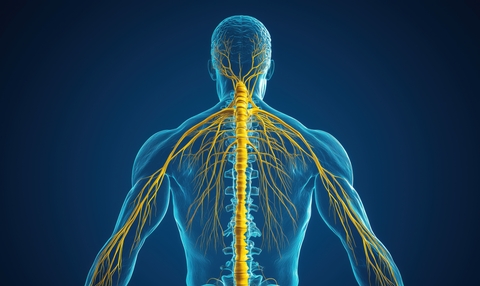
While it may seem confusing, the answer is yes and no. But let’s discuss both neuromodulators. Two main nerve stimulators or neuromodulation types are used for chronic pain: Spinal cord stimulation (SCS) and peripheral nerve stimulation (PNS). Both options use mild electrical signals to “interfere” or “block” pain signals from reaching your brain.[1] While they sound similar in function (and in some ways, they are), their use varies depending on where your pain is located and what is causing it.
If you’ve been dealing with chronic pain, you’ve probably tried a mix of treatments, including medication, physical therapy, injections…the list goes on. But what happens when the pain won’t ease up? Nerve stimulation therapy may be the solution you’ve been seeking. It might sound high-tech (because it is), but it’s a safe, proven, and FDA-approved method that could help you take back your life without opioids or other strong medications.[2] It’s surprisingly simple once you understand what nerve stimulation does.
How Are SCS and PNS Similar?
Let’s start with what SCS and PNS have in common.
Both treatments use a small, implanted electrotherapy device that sends tiny electrical impulses to disrupt pain signals before they can reach your brain. Think of it as turning down the volume of pain.
These devices are FDA-approved, minimally invasive, and drug-free, which is a big plus if you want to avoid relying on medications. Instead, they tap into your body’s nervous system to reduce or mask the pain that the brain’s receptors feel.[3]
Even if this sounds a little sci-fi, they really work. A study published in Pain Practice found that SCS significantly reduced pain in patients with failed back surgery syndrome and complex regional pain syndrome. At the same time, PNS has shown promising results for nerve pain, migraines, and more. [2,4]
Spinal Cord Stimulation (SCS)
Spinal Cord Stimulation involves placing electrodes near your spinal cord.[1] These electrodes are connected to a small, battery-powered generator implanted under the skin (usually in the lower back). The generator sends pulses to interrupt the pain messages within the spinal cord before they reach the brain.
SCS is often used to treat pain in the back, legs, or arms, especially for people with chronic back pain, sciatica, degenerative disc disease, complex regional pain syndrome, or nerve pain following surgery.[1] You’ll usually try it out first during a short trial period before getting a permanent implant.
Peripheral Nerve Stimulation (PNS)
Peripheral nerve stimulation works similarly but targets the nerves outside the spinal cord, usually closer to where you feel the pain.[2] The device is implanted with electrodes that deliver electrical impulses near the painful peripheral nerve (like in your shoulder).
PNS is an excellent option for individuals experiencing localized nerve pain, including post-surgical pain, nerve injuries, migraines, occipital neuralgia, postherpetic neuralgia, and certain types of joint-related pain.[2] It’s beneficial for pain that’s limited to one area—like the shoulder, knee, or a specific nerve injury—especially when other treatments haven’t worked well.[5]
So, What’s the Difference Between PNS and SCS?
The Cliff Notes version of their differences can be explained like this:
- SCS targets the spinal cord for more widespread, radiating, or lower body pain.
- PNS targets individual nerves and is better for localized pain in specific areas.
They work on the same principle—electrical stimulation to block pain—but are placed in different spots depending on where your pain is coming from. Your pain specialist will determine the best option based on your pain type, location, and how you’ve responded to other treatments.
Ready to Quiet the Pain? Finding the Right Nerve Stimulator
Nerve stimulation therapy isn’t a one-size-fits-all, which is good, because neither is chronic pain. Both options, PNS and SCS, are designed to block pain and help take back control of your life. The best part? These devices offer relief without the need for heavy medications or risky surgeries.
If you’re tired of living with daily pain, your pain specialist will help you explore both neuromodulators, discuss the pros and cons, and determine which one best fits your condition and lifestyle.
Ready to tackle your pain with technology? Ask your pain specialist about nerve stimulation therapy—because you deserve a treatment that works with your body, not against it.
Resources:
- Garcia K, Wray JK, Kumar S. Spinal Cord Stimulation. [Updated 2023 Apr 24]. In: StatPearls [Internet]. Treasure Island (FL): StatPearls Publishing; 2025 Jan-. Accessed April 23, 2025. Available from: https://www.ncbi.nlm.nih.gov/books/NBK553154/
- Abd-Elsayed A, D’Souza RS. Peripheral Nerve Stimulation: The Evolution in Pain Medicine. Biomedicines [Internet]. 2021;10(1):18. Published 2021 Dec 23. doi:10.3390/biomedicines10010018. Accessed April 23, 2025. Available from: https://pmc.ncbi.nlm.nih.gov/articles/PMC8773238
- Sdrulla AD, Guan Y, Raja SN. Spinal Cord Stimulation: Clinical Efficacy and Potential Mechanisms. Pain Pract [Internet]. 2018;18(8):1048-1067. doi:10.1111/papr.12692. Accessed April 23, 2025. Available from: https://pmc.ncbi.nlm.nih.gov/articles/PMC6391880/
- Verrills P, Sinclair C, Barnard A. A review of spinal cord stimulation systems for chronic pain. J Pain Res [Internet]. 2016;9:481-492. Published 2016 Jul 1. doi:10.2147/JPR.S108884. Accessed April 23, 2025. Available from: https://pmc.ncbi.nlm.nih.gov/articles/PMC4938148/
- Cohen SP, Gilmore CA, Rauck RL, et al. Percutaneous Peripheral Nerve Stimulation for the Treatment of Chronic Pain Following Amputation. Mil Med [Internet]. 2019;184(7-8):e267-e274. doi:10.1093/milmed/usz11. Accessed April 23, 2025. Available from: https://pmc.ncbi.nlm.nih.gov/articles/PMC6614808/