
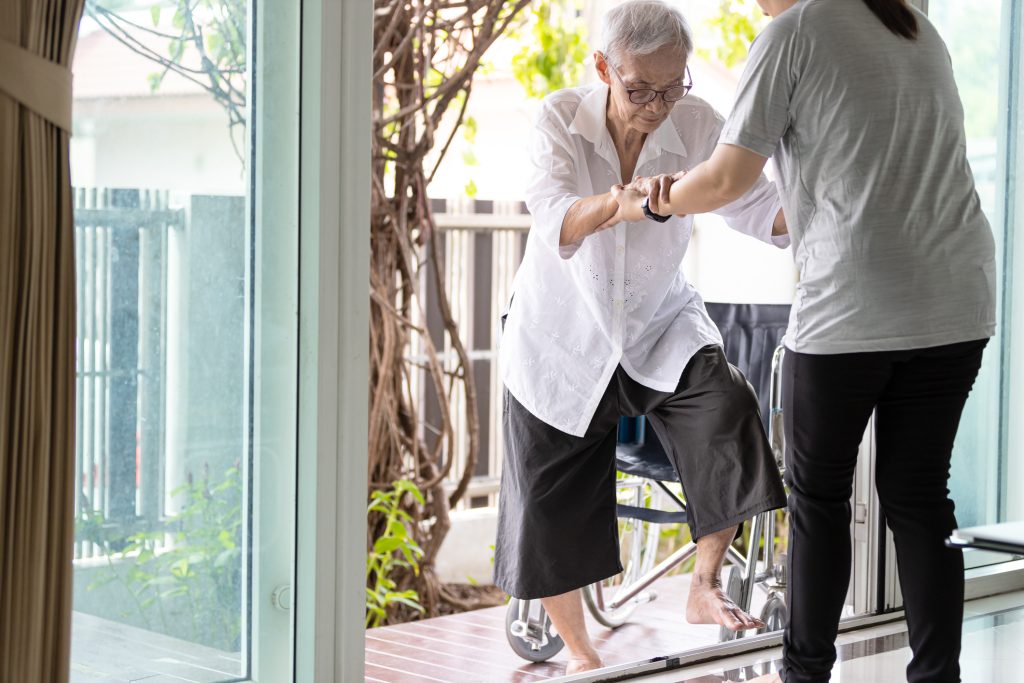
Many people assume living with chronic pain is something that happens only in later life, but it doesn’t discriminate. While your risk does increase as you get older, it can affect children, teens, young adults, mid-life adults, newly retired folks or anyone in between whose body has decided to wage war against itself.[1; 2] Often, pain, fatigue and other symptoms ebb and flow.
On a “good day,” you might move freely. On a “bad day,” the simple act of walking across your living room can feel like a marathon. Because of that variability, making your home safer and easier to live in is more than just a precaution; it can be a relief.
Here are simple, low-cost changes you can make around the house to reduce strain, increase safety and give yourself one less thing to worry about. These tips are for you, whether you live alone, with kids, a spouse or care for an older parent while dealing with your own pain, fatigue or mobility issues.
Maximize Your Home’s Safety and Accessibility When Living with Chronic Pain or Disability
Adaptations and modifications of spaces are often required when you live with chronic pain or a disability. Chronic conditions usually keep you home A LOT, so it makes sense to transform it to suit our needs for a better quality of life.
The bedroom, bathroom, kitchen, living room, and entryway are high-traffic areas and need to be addressed first for safety and accessibility. If you are having issues navigating these areas of your home, or if there are slip hazards, dark hallways, clutter, or difficult-to-use spaces, it’s time to maximize accessibility and make your home a safer and happier place to be!
1. Clear a Simple Path
When pain or fatigue hits you, moving around is harder. Furniture, clutter, loose rugs or awkward layouts become obstacles. Even when you’re tired, it may feel overwhelming to reorganize or declutter.
Try this: pick one high-traffic path (say, bedroom to bathroom or kitchen) and make sure it’s free of obstacles. This kind of path clearing is a key part of home modifications for people with mobility restrictions.[4; 5]
- Move furniture so you don’t have to twist or lean heavily.
- Remove or tape down rugs that could slip or trip you.
- Remove or relocate electrical cords behind furniture or along walls to reduce trip hazards in walkways.[3]
- Keep that path well lit (see the next section).
Conserve Your Energy: On a “good day,” do just 5 minutes of tidying in that zone. On a “bad day,” you’ve got the path safe without doing a complete overhaul.
2. Improve Lighting & Visibility
When you’re in pain or low on energy, your senses and reflexes might not be as sharp. Good, consistent lighting helps avoid trips, misses and unnecessary movements. Bright enough without being glare-heavy, and consider night-lights or motion sensors in halls or bathrooms.
Poor lighting is often an overlooked hazard in the homes of people managing chronic conditions.[4; 5]
Simple Fix: Use a plug-in motion sensor light in your hallway or near your bed, so you don’t have to fumble for switches in the dark. Set your lights on timers in your living space so they turn on automatically as the sun goes down—no need to get up when you’re trying to relax.
3. Make Your “Everyday Zone” Easy Breezy
There are items you reach for a lot in your daily life: a cupboard with dishes, medication, a phone charger, and a remote control. When your pain flares or fatigue hits, grabbing the stuff you need can become impossible.
Daily “Stuff” Tip: Pick out the spots you use most, whether it’s the kitchen counter where you fix your coffee, the living room couch where you unwind, or the dresser in your bedroom where you dress, and make them “easy-reach zones”, especially if your home is multi-level.
- Store frequently used items within “easy-reach” (waist to chest height) so you don’t bend or stretch.
- Keep a small basket or tray at your central sitting spot with snacks, water, phone, and meds.
- If you have a work-from-home or study area, your chair and table should support you, not worsen your posture. Design experts for chronic illness stress that the space should fit how you live now—not how you used to live.[5; 6]
On days when your pain or fatigue is higher, this setup lets you still do essential tasks without overtaxing your body.
4. Create “Sit-Spots” for Tough Days
Even if you’re not a wheelchair user, chronic pain often brings mobility or stamina ups and downs. Designate a few comfortable sitting spots where you can rest instead of always standing or moving around.
- Use a sturdy chair with good back support and arms to push up from.
- Place items within reach (remote, water, phone) so you can stay seated when needed.
- In the bedroom, consider adding a small bench or chair near the bed for resting when tired.
When your energy dips, you won’t force yourself into heavy movements, but you’ll still be safe and supported.
5. Add Low-Cost Assistive Tools
Assistive doesn’t always mean expensive. Here are simple additions that can help:
- Grab bars or secure rails near the toilet or shower—even for someone who doesn’t use a walker full-time—can make getting up easier. [4]
- A shower-chair or bench can make bathing less of a strain.
- Non-slip mats in the bathroom and kitchen.
- Lever-style door handles instead of knobs (less grip strength required).
- Use a plug with a long cord or an extension cord to avoid stretching.
These tools make things safer and more manageable, especially on days when your pain or fatigue is higher.
Multi-Level Home or Entrance Stairs? Install handrails on both sides of your staircases. It may be a costlier upgrade, but it’s necessary for your safety, especially when alone.[3]
6. Minimize Extra Tasks and Make Cleaning Manageable
Yes, one of the best ways to keep a home safe is to keep it clean and clutter-free—but doing a full deep-clean may be unrealistic when your body’s telling you “no thank you.” So:
- Set small goals: e.g., on good days, spend 10 minutes clearing one shelf or one counter.
- Use baskets or bins to group loose items and quickly reduce scattered stuff.
- Consider “maintenance overshoot”: on one good day, do a little more than usual (while you can), so the bad days have less to manage.
According to home-modification guides, clutter and heavy tasks are major triggers of injury or exacerbation of pain.[4; 7]
Ask for Help: If you can, ask a friend or family member to help with one big task (moving furniture, clearing a closet) so you only have to maintain it afterward.
7. Plan for Bad Days
Living with pain means every day may not look the same, and you’ll need to adapt. Having a plan for low-energy days helps.
- Keep a “day kit” in a basket: medications, a phone charger, a water bottle, a notebook, and maybe a list of helpful contacts.
- Keep one outfit or essential items readily accessible (in a drawer near bed).
- Know who your support is: a neighbor, a friend, a family member, or a telehealth contact.
- Have a small step stool or a grab tool handy to avoid bending when you don’t feel strong enough.
These little preparations reduce stress and help keep you safe when your body isn’t cooperating.
Talk to Your Pain Specialist About Making Your Home a Safe Sanctuary
You don’t need to overhaul your entire home to make it safer or more comfortable. Start small. Make one change at a time, especially those that make the most significant difference when your pain flares or your energy runs low. Each tweak adds up to more effortless movement, less strain, and a calmer environment.
If you’re not sure where to begin, talk with your pain specialist or care team. They can suggest practical, low-cost modifications or connect you with an occupational therapist who specializes in home accessibility. Safe, simple changes help you save your energy for what really matters—your family, your hobbies, your rest—not just surviving the space you live in. With time, those little adjustments can turn your home into what it should be: your sanctuary.
Disclaimer: This blog is for educational purposes only and should not replace professional medical advice, diagnosis, or treatment. If you experience sudden, severe, or worsening pain — especially if it’s accompanied by symptoms like fever, numbness, weakness, shortness of breath, chest pain, or loss of bladder or bowel control, seek immediate medical care. Don’t wait for your next pain management appointment.
Resources:
- Fact Sheet: Chronic Pain in Children and Adolescents. Society of Pediatric Psychology [Internet]. Accessed November 10, 2025. Available from: https://pedpsych.org/fact_sheets/chronic_pain/
- Zelaya CE, Dahlhamer JM, Lucas JW, et al. Chronic Pain and High-Impact Chronic Pain Among U.S. Adults, 2019. National Center for Health Statistics – CDC [Internet]. Published November 2020. Accessed November 10, 2025. Available from: https://www.cdc.gov/nchs/products/databriefs/db390.htm
- Cattel J. 9 Small Projects That Make Your Home Much Safer. Silver Sneakers [Internet]. Published September 17, 2021. Accessed November 10, 2025. Available from: https://www.silversneakers.com/blog/9-small-projects-that-make-your-home-much-safer/
- Unwin BK, Andrews CM, Andrews PM, et al. Therapeutic Home Adaptations for Older Adults with Disabilities. American Family Physician [Internet]. 2009;80(9):963-968. Accessed November 10, 2025. Available from: https://www.aafp.org/pubs/afp/issues/2009/1101/p963.html
- Home Design: Living Well with Chronic Conditions. Live in Place Designs [Internet]. Accessed November 10, 2025. Available from: https://liveinplacedesigns.com/how-home-design-can-help-you-live-with-a-chronic-illness-or-condition/
- How to live well with Chronic Illness and pain at home. HaloCare [Internet]. Published March 15, 2024. Accessed November 10, 2025. Available from: https://blog.halocaregroup.com/how-to-live-well-with-chronic-illness-and-pain-at-home
- Adapted Homes, Empowered Lives. Versus Arthritis [Internet]. Accessed November 10, 2025. Available from: https://www.versusarthritis.org/media/21554/adapted-homes-empowered-lives-report-2019.pdf