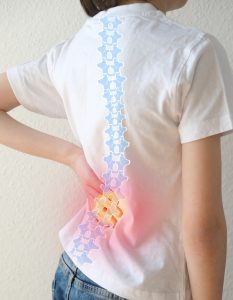
Chronic neck pain can disrupt every part of your life, from working comfortably to getting a good night’s sleep. If you’re struggling with ongoing pain that hasn’t responded to rest, medication, or physical therapy, a cervical epidural steroid injection (CESI) may be the next step toward lasting relief. This targeted, minimally invasive procedure delivers anti-inflammatory medication directly to the source of your pain, offering relief from inflamed nerves in your neck and upper spine caused by injury or damage.[1]
How Cervical Epidural Steroid Injections Work
A cervical ESI is a procedure that involves injecting an anti-inflammatory (steroid or corticosteroid) and a local anesthetic into the epidural space in your cervical spine (the area surrounding the spinal cord in your neck).[2] The steroid is delivered right to the compressed or pinched nerves to reduce inflammation and irritation.[1] It’s also beneficial for pain that radiates from your neck into your shoulder and down your arm.[3]
According to Healthline, there are two types of cervical epidural injections:
Interlaminar injections go into the middle of the spine between the vertebrae.
Transforaminal injections are placed from the side, targeting the nerve root more directly.
The procedure for either injection type is done under fluoroscopic (X-ray) guidance to ensure precise placement of the medication. Relief may begin within a few days, although it can take up to a week for the full effects to be noticeable.[2,4]
Conditions Treated with a CESI
CESIs are most commonly used to treat nerve root inflammation or compression in the cervical spine. These targeted injections treat neck conditions such as:
Cervical herniated discs [2]
Degenerative disc disease [2]
Cervical spinal stenosis [2]
Cervical radiculopathy (nerve pain radiating into the shoulder or arm) [3]
Osteoarthritis of the neck [2]
If your pain radiates from your neck down your arm, CESIs can be especially effective in reducing inflammation around the affected nerve root. [3]
Benefits of Cervical ESIs
The main benefit of a CESI is targeted pain relief—right where you need it most. Pain relief allows you to move more comfortably, sleep better, and participate more fully in physical therapy or daily activities. For many patients, CESIs offer enough relief to delay or avoid surgery.[5]
Other benefits include:
Targeted Pain Relief: Drug-free relief that may last anywhere from several weeks up to two years.[2].
Short Recovery: You’ll go home the same day, experience pain for 1-3 days, and return to your regular routine within 24-48 hours.[1]
Outpatient Procedure: No hospital stay! You can go home shortly after the procedure and rest at home.
Keeps You Active: Enhances your quality of life, enabling you to participate fully in physical therapy and daily activities.
Minimally Invasive: No incisions, no stitches, and little to no downtime.
While CESIs are not a permanent fix, they can be an essential part of a long-term pain management plan.[1]
Consult a CESI Specialist for Pain Management
Neck pain can be—well—a pain in the neck. When it’s accompanied by shoulder or arm pain, it can become truly debilitating. If you’ve tried other conservative options and you’re ready for real solutions, a cervical epidural steroid injection may just be the key to feeling better.
CESIs work best as part of a holistic, whole-body approach to pain management. Your specialist may recommend combining the injection with physical therapy, posture training, chiropractic care, or other interventional procedures like radiofrequency ablation or trigger point injections, depending on your needs[3,6]
You don’t have to live with chronic neck pain. Let a pain management specialist help you find real relief with a cervical epidural steroid injection and get you back to doing what you love.
Cho JH. Updates on the treatment of adhesive capsulitis with hydraulic distension. Yeungnam Univ J Med [Internet]. 2021;38(1):19-26. doi:10.12701/yujm.2020.00535. Accessed May 29, 2025. Available from: https://pmc.ncbi.nlm.nih.gov/articles/PMC7787893/
Haughton DN, Barton S, Meenan E, et al. Can we improve the outcome of hydrodilatation for adhesive capsulitis?. Shoulder Elbow [Internet]. 2018;10(2):93-98. doi:10.1177/1758573217706199. Accessed May 29, 2025. Available from: https://pmc.ncbi.nlm.nih.gov/articles/PMC5851122/
Lädermann A, Piotton S, Abrassart S, Mazzolari A, Ibrahim M, Stirling P. Hydrodilatation with corticosteroids is the most effective conservative management for frozen shoulder. Knee Surg Sports Traumatol Arthrosc [Internet]. 2021 Aug;29(8):2553-2563. doi: 10.1007/s00167-020-06390-x. Epub 2021 Jan 9. PMID: 33420809. Accessed May 29, 2025. Available from: https://pubmed.ncbi.nlm.nih.gov/33420809/
Makki D, Al-Yaseen M, Almari F, et al. Shoulder hydrodilatation for primary, post-traumatic and post-operative adhesive capsulitis. Shoulder & Elbow. 2020;13(6):649-655. doi:10.1177/1758573220977179. Accessed May 29, 2025. Accessed May 29, 2025. Available from: https://journals.sagepub.com/doi/abs/10.1177/1758573220977179
Poku D, Hassan R, Migliorini F, Maffulli N. Efficacy of hydrodilatation in frozen shoulder: a systematic review and meta-analysis. Br Med Bull [Internet]. 2023;147(1):121-147. doi:10.1093/bmb/ldad018. Accessed May 29, 2025. Available from: https://pmc.ncbi.nlm.nih.gov/articles/PMC10788845/