
Spine Pain
PAIN CONDITION
Spine Pain: Causes, Treatment & Pain Relief
Spinal pain is one of the most common reasons people seek medical care.[1] Whether it’s a dull ache, sharp pain, or persistent stiffness, spine pain can make even simple tasks feel impossible. In more severe cases, it can be completely debilitating, keeping you from work, family time, and the activities you love. While minor backaches may resolve on their own, ongoing or worsening spinal pain can indicate a deeper issue that won’t just go away.
If your pain is interfering with your daily life, it’s essential to seek medical care. A proper diagnosis can help determine the cause, and non-surgical pain management options can help you move, feel, and live better.
About Spine Pain
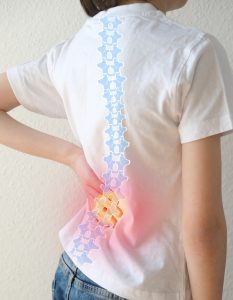
The spine is a bony structure that supports your body, allowing you to stand upright, walk, bend, and move. It’s a complex system made up of vertebrae, discs, joints, soft tissues, and nerves, all working together to protect your spinal cord.[2] Spinal pain is often referred to as back pain, but back pain is a broad term. While back pain can involve muscles, ligaments, or other soft tissues, spinal pain originates from the bones, joints, discs, or nerves of the spine. Your spine is divided into several segments: cervical (neck), thoracic (mid-back), lumbar (lower back), sacrum, and coccyx (tailbone).[2]
Spine-related issues may cause symptoms like numbness, tingling, or weakness in an extremity, and pain may radiate to other areas, such as the legs or buttocks. Whether your pain stems from an injury, disorder, deformity, or degeneration, pain management specialists can often help ease your discomfort.
Is your back pain spinal or muscular? Learn the difference between spinal disc pain and muscular pain.
Spine Pain Symptoms
Your spine pain can present differently depending on the cause and severity. Some people experience localized pain, while others may feel radiating discomfort that extends to the arms, legs, or other areas.
Common symptoms of spinal-related problems include:
- Persistent back or neck pain [3]
- Muscle stiffness or spasms [3]
- Shooting or burning pain that radiates down the arms or legs [3]
- Numbness, or tingling in extremities [3]
- Limited range of motion or difficulty standing up straight
- Increased pain with movement, bending, or lifting [3]
- Headaches or dizziness (when related to cervical spine issues)
- Burning pain [3]
- Sharp, electric shock-like pain [3]
- Worsening pain when standing, walking, or sitting [3]
- Chest pain around the ribcage [3]
- Weakness in arms and/or legs [4]
- Unsteadiness, with poor balance [4]
- Lost hand dexterity or difficulty with fine-motor tasks, such as handwriting, buttoning shirts, etc.[4]
- Loss of bladder or bowel function (usually along with other spinal symptoms mentioned) [4]
Spine Pain Causes
Spine pain can result from various conditions, injuries, disorders, or degenerative changes. While some cases stem from acute injuries, others are the result of wear and tear, disease, or congenital issues.
These are some common causes of spinal pain:
Spinal cord injury or trauma [5]
Strained back [1]
Sprained back [1]
Bulging discs [6]
Herniated or slipped discs [5]
Degenerative disc disease [1]
Osteoarthritis of the spine [1]
Spinal fractures or broken back [5]
Myofascial pain syndrome [1]
Scoliosis or curvature of the spine [5]
Spinal stenosis [6]
Spondylolisthesis [5]
Ankylosing spondylitis [5]
Sacroiliitis [1]
Sciatica [5]
Spinal tumors [5]
Bone spurs [7]
Kyphosis [5]
Spine Pain Management Treatments
When your back pain is spinal pain and traditional methods like rest and OTC pain relievers haven’t provided relief, a comprehensive approach to pain management may deliver results without surgery.
Physical therapy can strengthen your back muscles to support your spine and increase mobility. Complementary therapies like massage, acupuncture, tai chi and yoga may be used with pain management. Lifestyle changes such as maintaining a healthy weight, exercise, and improving your posture can help reduce stress on your spine, helping to relieve pain, inflammation and irritation, especially with vertebral disc issues.
A comprehensive pain management plan offers an alternative to invasive surgical procedures, long recoveries, and the risk of complications or failed surgery. Interventional pain control methods like nerve blocks and regenerative medicine can reduce pain, inflammation and nerve irritation while restoring function and comfort.
Interventional pain control procedures for spine-related pain may include:
Trigger point injections
Corticosteroid injections
Joint injections
Nerve blocks
Hyaluronic acid (HA) injections
Peripheral nerve blocks
Prolotherapy
Platelet-rich plasma (PRP) therapy
Stem cell therapy
Radiofrequency ablation (RFA)
Stellate ganglion block
Peripheral nerve stimulation (PNS)
Spinal cord stimulation (SCS)
Intrathecal pain pumps
Caudal epidural steroid injection
Costovertebral joint injection
Lumbar epidural steroid injection
Lumbar sympathetic block
Lumbar transforaminal epidural steroid injection
Cervical facet radiofrequency neurotomy
Epidural steroid injection (ESI) in the cervical spine
Kyphoplasty
Medial branch block
Radiofrequency neurotomy
Percutaneous cervical disc nucleoplasty
Sacroiliac joint steroid injection
Spinal disk decompression
When to Consult a Spine Pain Care Specialist
Knowing when to consult a spinal pain care specialist is an important step in managing ongoing discomfort that doesn’t improve on its own. While some aches may come and go, others may require a closer look to understand what’s causing the issue. A specialist can help evaluate your spine health and determine whether further attention or monitoring is needed.Is your wrist pain lingering longer than expected? If it interferes with daily activities or worsens despite rest and home care, it may be time to see a pain management specialist. Chronic wrist pain could signal an underlying condition or an old injury that needs proper attention.
Seeing a specialist also gives you access to expert guidance and care tailored to your needs. They can help you understand what may be contributing to your discomfort and what next steps make sense. If you feel uncertain about changes in how your body feels or moves, scheduling an appointment can offer clarity and peace of mind.
Disclaimer: This resource provides general information about spine pain, associated medical conditions and injuries and is not a substitute for professional medical advice, diagnosis, or treatment. Seek emergency care if your spine pain is accompanied by loss of bladder or bowel control, severe weakness or numbness, difficulty walking, intense or sudden pain after an injury, sharp tearing pain in the back or abdomen, fever, chills, unexplained weight loss, or back pain with chest pain or shortness of breath. These symptoms may indicate a serious condition requiring immediate medical attention. Always consult a doctor for proper evaluation and treatment.







Resources:
- Back Pain. National Institute of Arthritis and Musculoskeletal and Skin Diseases [Internet]. Published April 23, 2019. Accessed March 27, 2025. Available from: https://www.niams.nih.gov/health-topics/back-pain
- Spine Structure and Function. Cleveland Clinic [Internet]. Accessed March 27, 2025. Available from: https://my.clevelandclinic.org/health/body/10040-spine-structure-and-function
- Spinal Pain. American Association of Neurological Surgeons – AANS [Internet]. Accessed March 27, 2025. Available from: https://www.aans.org/patients/conditions-treatments/spinal-pain/
- Marmon D. Common Spine Conditions. Spine and Brain [Internet]. Published 2019. Accessed March 28, 2025. https://spineandbrain.co.uk/common-spine-conditions
- Brown S. Common Spine Problems. WebMD [Internet]. Accessed March 27, 2025. Available from: https://www.webmd.com/back-pain/ss/slideshow-spine-problems
- Pham Van S. 7 Ways to Treat Chronic Back Pain Without Surgery. Johns Hopkins Medicine [Internet]. Accessed March 27, 2025. Available from: https://www.hopkinsmedicine.org/health/conditions-and-diseases/back-pain/7-ways-to-treat-chronic-back-pain-without-surgery
- Herniated Disk and Bone Spurs on Spine. Mayo Clinic [Internet]. Accessed March 27, 2025. Available from: https://www.mayoclinic.org/diseases-conditions/back-pain/multimedia/img-20538166