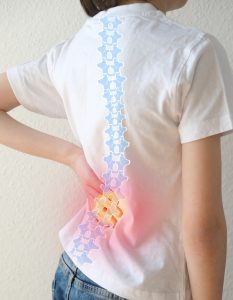
Is lower back pain disrupting your life? Back pain, especially the type that worsens when standing or walking, can be caused by lumbar spinal stenosis (LSS), a condition caused by the narrowing of the spinal canal. Many adults over 50 experience this chronic condition with back and leg pain, tingling and numbness.[1] Relief can be delivered without major surgery with an innovative procedure called Minimally Invasive Lumbar Decompression (MILD®).
MILD® is a quick, outpatient treatment that relieves pressure on your nerves and improves mobility without the risks or long recovery of back surgery.[2]
How Minimally Invasive Lumbar Decompression Works
The MILD® procedure is performed through a small incision—about the size of a baby aspirin—using specialized tools and imaging guidance. During the procedure, the physician removes thickened ligament tissue, providing space in the spinal canal and relieving pressure on the spinal nerves.[3] This FDA-cleared procedure has a strong safety profile, low risk of complications, and effectively decompresses the spinal canal, reducing pain, numbness and tingling in the lower extremities.[3]
MILD® has significantly improved pain, mobility, and quality of life, providing results similar to those of more invasive surgical options.[1] The whole process typically takes under an hour and is done without general anesthesia, implants, or stitches. Most patients go home the same day and resume light activities within days.[3]
Conditions Treated with Minimally Invasive Lumbar Decompression
The non-opioid MILD® procedure offers an effective non-surgical option for painful spinal conditions, including:
Lumbar spinal stenosis (LSS) [4]
Neurogenic claudication [4]
Hypertrophic ligamentum flavum [4]
Cauda equina syndrome [5]
Slipped disc (herniated disc) [5]
Sciatica [5]
Metastatic spinal cord compression (cancer) [5]
Spinal tumors [5]
Spinal injury [5]
Chronic low back pain conditions like osteoarthritis and degenerative disc disease (related to spinal canal narrowing)
Benefits of the MILD Procedure
Minimally invasive lumbar decompression is an emerging technology that offers several advantages over traditional treatments, including:
Minimally Invasive: No general anesthesia, no stitches, and a tiny incision make it easier on the body. [6]
Fast Recovery: Many patients walk out the same day and return to normal routines within a few days. [3]
Drug-Free Solution: Helps reduce reliance on addictive pain medications, especially opioids. [3]
Long-Lasting Relief: Clinical studies show sustained improvements in function and pain levels for up to two years or more. [7]
No Open Surgery: Provides a highly effective alternative for patients who aren’t candidates for or want to avoid major surgery. [1]
Low Risk of Complications: Reported complication rates are lower than those of traditional decompression surgeries. [8]
Consult a MILD Procedure Specialist for Pain Management
If you’re dealing with chronic back or leg pain from lumbar spinal stenosis or another condition that narrows the spinal canal, the MILD® procedure may be the advanced solution you’ve been looking for. Needing to sit, bend forward, or curl into a fetal position just to get temporary relief isn’t a sustainable way to live.
This minimally invasive treatment offers an alternative to traditional surgery—ideal for patients who can’t tolerate major procedures or simply want to avoid them. With a low risk of complications, it’s a proven next step when conservative treatments like physical therapy, medications, and epidural injections haven’t worked.
You don’t have to keep suffering with daily pain, numbness, or tingling that gets worse when standing or walking—basic activities that you shouldn’t have to sacrifice. Talk to a pain management specialist to see if the MILD® procedure is right for you. Getting evaluated early can help you stay active and comfortable—without resorting to invasive back surgery.
Yuan H, Yi X. Lumbar Spinal Stenosis and Minimally Invasive Lumbar Decompression: A Narrative Review. J Pain Res [Internet]. 2023;16:3707-3724. Published 2023 Nov 6. doi:10.2147/JPR.S428112. Accessed April 30, 2025. Available from: https://pmc.ncbi.nlm.nih.gov/articles/PMC10637222/
Mild® Procedure for Lumbar Spinal Stenosis (LSS). Vertos Medical [Internet]. Published October 7, 2024. Accessed April 30, 2025. Available from: https://www.vertosmed.com/patients/
Deer TR, Costandi SJ, Washabaugh E, Chafin TB, Wahezi SE, Jassal N, Sayed D. The MOTION Study: A Randomized Controlled Trial with Objective Real-World Outcomes for Lumbar Spinal Stenosis Patients Treated with the mild® Procedure: One-Year Results. Pain Med [Internet. 2022 Apr 8;23(4):625-634. doi: 10.1093/pm/pnac028. PMID: 35167700; PMCID: PMC8992575. Accessed April 30, 2025. Available from: https://pubmed.ncbi.nlm.nih.gov/35167700/
Lawrence MM, Hayek SM. Minimally invasive lumbar decompression: a treatment for lumbar spinal stenosis. Curr Opin Anaesthesiol [Internet]. 2013 Oct;26(5):573-9. doi: 10.1097/01.aco.0000432520.24210.54. PMID: 23963231. Accessed April 30, 2025. Available from: https://pubmed.ncbi.nlm.nih.gov/23963231/
Benyamin RM, Staats PS, MiDAS Encore I. MILD® Is an Effective Treatment for Lumbar Spinal Stenosis with Neurogenic Claudication: MiDAS ENCORE Randomized Controlled Trial. Pain Physician [Internet]. 2016 May;19(4):229-42. PMID: 27228511. Accessed April 30, 2025. Available from: https://pubmed.ncbi.nlm.nih.gov/27228511/