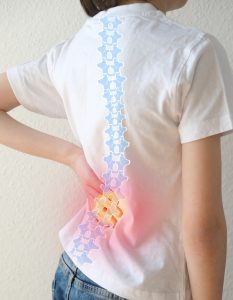
The vertebrae (small bones) in your spine can fracture just like other bones in your body. Your spine is designed for strength and stability, but conditions like osteoporosis can weaken your vertebrae, allowing them to fracture due to a fall or pressure.[1] There is no cure for vertebral compression fractures, but a minimally invasive surgical procedure called kyphoplasty can help restore the structural integrity of the compromised bones.[2]
What is a Kyphoplasty?
Kyphoplasty is a relatively new procedure that treats spinal compression fractures due to cancer, osteoporosis or injury. It has replaced vertebroplasty, which uses fluoroscopic guidance to inject bone cement into the affected vertebra.[3] Kyphoplasty combines the balloon insertion to restore the vertebrae’s original height with a cement injection to stabilize the fractured bone. Because of this process, it’s also called “balloon-assisted kyphoplasty.”[3]
How Balloon Kyphoplasty Works
You’ll receive medication to relax you or put you to sleep before starting the procedure. During your kyphoplasty, your pain specialist will use real-time X-ray guidance to insert a needle into a small incision near the damaged vertebra.[4] A balloon-like device, a tamp, is inflated within the affected bone, returning it to its original height and shape.[4]
Once the balloon has created space within the collapsed or fractured vertebrae, an injection of bone cement will strengthen and stabilize your spine.[2] This stabilization helps eliminate back pain associated with brittle, weakened or fractured vertebrae.
Conditions Treated with Kyphoplasty
Spinal fractures can occur from weakened, brittle or damaged vertebrae. Compressed or collapsed vertebrae can occur due to any of the following:
Osteoporosis [5]
Spinal tumors [5]
Vertebral compression fractures [5]
Cancer, including multiple myeloma [6]
Trauma or injury that caused broken bones in the spine [6]
If you’ve been diagnosed with one of these conditions and are struggling with persistent pain, kyphoplasty can help restore the height of your vertebrae, improve your posture, and significantly reduce your discomfort, helping you regain mobility.
Benefits of Kyphoplasty
Kyphoplasty for spinal compression fractures is a minor surgery that only involves tiny incisions requiring little downtime. Acrylic bone cement hardens quickly, delivering results fast. Other benefits of this procedure include:
Pain relief: Many patients report reduced pain immediately after the procedure.[7]
Improved mobility: Restoring the vertebra’s height helps improve posture and reduce strain on surrounding muscles.
Minimally invasive: Uses a small incision during a quick procedure.
Quick recovery: With no large incisions, recovery is faster than traditional surgery. Most patients resume light activities within days.
Prevention of further complications: Stabilizing the fracture reduces the risk of additional spinal issues. [8]
Eliminates surgery: Helps some patients avoid complex surgical procedures. [2]
Kyphoplasty is worth exploring for anyone looking for an effective, low-risk option to address spinal fractures. Your doctor will review your condition and medical history to determine if you fit this procedure’s criteria.
Kyphoplasty Procedures and Pain Management Clinics
You don’t have to suffer from pain and immobility due to spinal fractures. If conventional treatments haven’t helped stabilize your spine or relieve the pain, kyphoplasty may promise spinal restoration.
Spinal fracture stabilization offers reliable and low-risk treatment to relieve back pain and regain function. Your reliance on medication may be reduced, and you’ll be back to normal activities quickly, much sooner than with traditional surgery.
If you’ve been struggling with spinal fractures or damaged vertebrae due to cancer, injury or osteoporosis, kyphoplasty can reduce your pain without major surgery. Talk to a pain management specialist today to learn if kyphoplasty is right for you. Explore a treatment plan that combines cutting-edge interventional techniques with supportive therapies to ease your pain and restore your quality of life.
Cloft HJ, Jensen ME. Kyphoplasty: an assessment of a new technology. AJNR Am J Neuroradiol [Internet]. 2007;28(2):200-203. Accessed December 20, 2024. Available from: https://pmc.ncbi.nlm.nih.gov/articles/PMC7977394/
Kasperk C, Grafe IA, Schmitt S, et al. Three-Year Outcomes after Kyphoplasty in Patients with Osteoporosis with Painful Vertebral Fractures. 10.1016/j.jvir.2010.01.003 Journal of Vascular and Interventional Radiology [Internet]. Volume 21, Issue 5, 701 – 709. Accessed December 20, 2024. Available from: https://www.jvir.org/article/S1051-0443(10)00019-9/