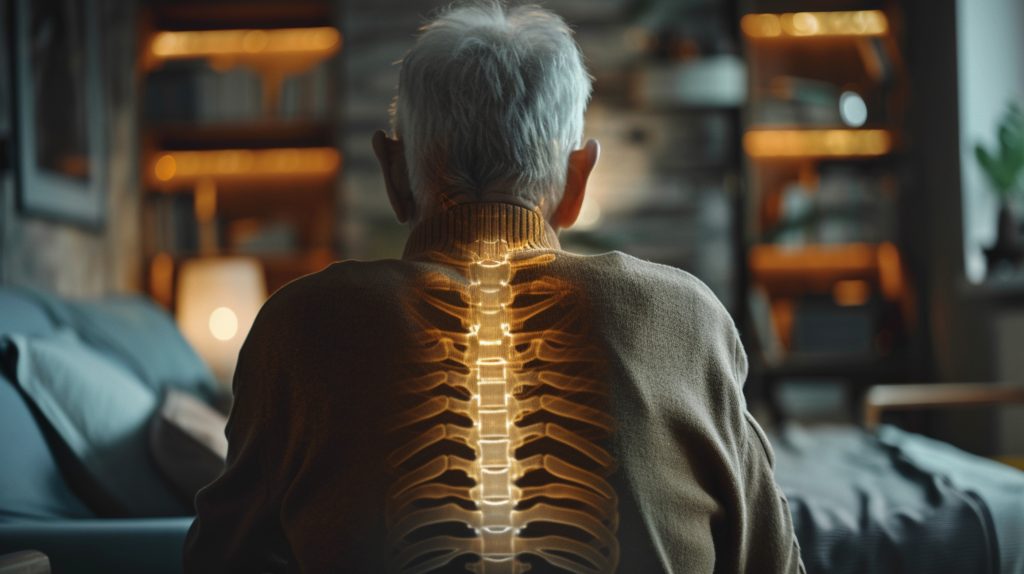
If you’ve been struggling with chronic back pain, you’re not alone. A national survey shows that 8.2% of American adults are dealing with chronic back pain.[1] This common issue can interfere with work, school and daily life. If you haven’t found relief from various treatment options and would like to avoid open surgery and its risks and lengthy recovery, nucleoplasty or percutaneous disc decompression may be the solution you’ve been looking for.
Let’s examine what to expect after this procedure and how long it will take you to return to your daily routine.
Understanding the Nucleoplasty Process
Before we discuss recovery time, let’s take a quick look at what nucleoplasty involves. Nucleoplasty is a minimally invasive procedure designed to relieve pain caused by herniated discs. A specialized needle is inserted into the affected disc during the image-guided procedure.[2] Using radio waves, the center of the disc is dissolved to reduce pressure on the nerves and relieve pain.[2] Nucleoplasty or percutaneous plasma disc decompression (PPDD) is minimally invasive, involves less risk than traditional back surgery and can be performed on an outpatient basis.
Post-Procedure Protocol: The First 24 Hours
After the procedure, you’re moved to a recovery area, where medical staff will monitor you for a few hours.[3] You might feel groggy from the sedation, but this wears off quickly. Some patients experience mild soreness at the needle insertion site, but this usually subsides within a few days. You’ll be discharged the same day with the instructions to avoid heavy lifting, bending and twisting.[3] Rest is crucial during this time, so take it easy and let your body begin the healing process.
The First Week: Take It Easy
During the first week, it’s all about gentle activity. You might be advised to avoid heavy lifting and strenuous exercise. Walking and light activities are encouraged to keep blood flowing and aid recovery.[4] Most people can return to light work or daily activities within a few days, depending on their condition and overall health.[4] Remember, listen to your body and don’t push yourself too hard.
Weeks Two to Four: Gradual Return to Everyday Routines
As you move into the second to fourth-week post-procedure, you’ll likely notice a significant reduction in pain. This is when you can start reintroducing more of your regular activities and gentle exercises.[4] Physical therapy might be recommended to help strengthen your back and ensure proper healing.[3] The goal is to gradually increase your activity level without overdoing it.
Long-Term Recovery: Patience Pays Off
Long-term recovery from nucleoplasty can vary. Some patients feel almost immediate relief, while others notice a gradual improvement over several months.[5] In some cases, pain reliever use is reduced or stopped altogether.[6] By the two to three-month mark, many people find they’re back to their usual routines with minimal discomfort.[7] Keeping up with any prescribed physical therapy and maintaining a healthy lifestyle are essential to ensuring the best long-term outcome.
Who Is a Candidate for Nucleoplasty?
If you’ve suffered from chronic back pain for more than three months and conservative treatments have failed, you may be a candidate for nucleoplasty or PPDD. Patients with bulging or herniated discs often have the best results. If your leg pain, limb numbness or weakness is due to nerve compression, PPDD may provide relief.[8] Disc degenerative diseases can also be treated successfully with nucleoplasty.[8]
Your doctor will perform a thorough evaluation, including imaging studies like MRI or CT scans, to determine if nucleoplasty is the right option for you.
Resources:
- U.S. National Survey Identifies Associations Between Chronic Severe Back Pain and Disability. NCCIH [Internet]. September. 09. 2022. Accessed June 14, 2024. Available from: https://www.nccih.nih.gov/research/research-results/us-national-survey-identifies-associations-between-chronic-severe-back-pain-and-disability
- Yang B, Xie J, Yin B, Wang L, Fang S, Wan S. Treatment of cervical disc herniation through percutaneous minimally invasive techniques. European Spine Journal [Internet]. 2014;23(2):382. Accessed June 14, 2024. doi:https://doi.org/10.1007/s00586-013-3063-3 Available from: https://www.ncbi.nlm.nih.gov/pmc/articles/PMC3906466/
- de Rooij JD, Gadjradj PS, Soria van Hoeve JS, Huygen FJ, Aukes HA, Harhangi BS. Percutaneous Nucleoplasty for the Treatment of a Contained Cervical Disk Herniation. Clinical spine surgery [Inernet]. 2017;30(9):389-391. Accessed June 14, 2024. doi:https://doi.org/10.1097/bsd.0000000000000583 Available from: https://www.ncbi.nlm.nih.gov/pmc/articles/PMC5657467
- Karaman H, Tufek A, Olmez Kavak G, et al. Effectiveness of nucleoplasty applied for chronic radicular pain. Medical Science Monitor [Inernet]. 2011;17(8):CR460-CR465. Accessed June 14, 2024. doi:https://doi.org/10.12659/msm.881908 Available from: https://www.ncbi.nlm.nih.gov\/pmc/articles/PMC3539605/
- Holland K. Recovery Time for Different Back Surgeries. Healthline [Internet]. June 23, 2023. Accessed June 14, 2024. Available from: https://www.healthline.com/health/back-pain/recovery-time-for-back-surgery
- Cincu R, Lorente F de A, Gomez J, Eiras J, Agrawal A. One decade follow-up after nucleoplasty in the management of degenerative disc disease causing low back pain and radiculopathy. Asian Journal of Neurosurgery [Inernet]. 2015;10(1):21-25. doi:https://doi.org/10.4103/1793-5482.151504 Available from: https://www.ncbi.nlm.nih.gov/pmc/articles/PMC4352623/
- Cesaroni A, Nardi PV. Plasma disc decompression for contained cervical disc herniation: a randomized, controlled trial. European Spine Journal [Inernet]. 2009;19(3):477-486. Accessed June 14, 2024. doi:https://doi.org/10.1007/s00586-009-1189-0 Available from: https://www.ncbi.nlm.nih.gov/pmc/articles/PMC2899766/
- Liliang PC, Lu K, Liang CL, Chen YW, Tsai YD, Tu YK. Nucleoplasty for treating lumbar disk degenerative low back pain: an outcome prediction analysis. Journal of Pain Research [Internet]. 2016;9:893-898. Accessed June 14, 2024. doi:https://doi.org/10.2147/jpr.s116533 Available from: https://www.ncbi.nlm.nih.gov/pmc/articles/PMC5096781/