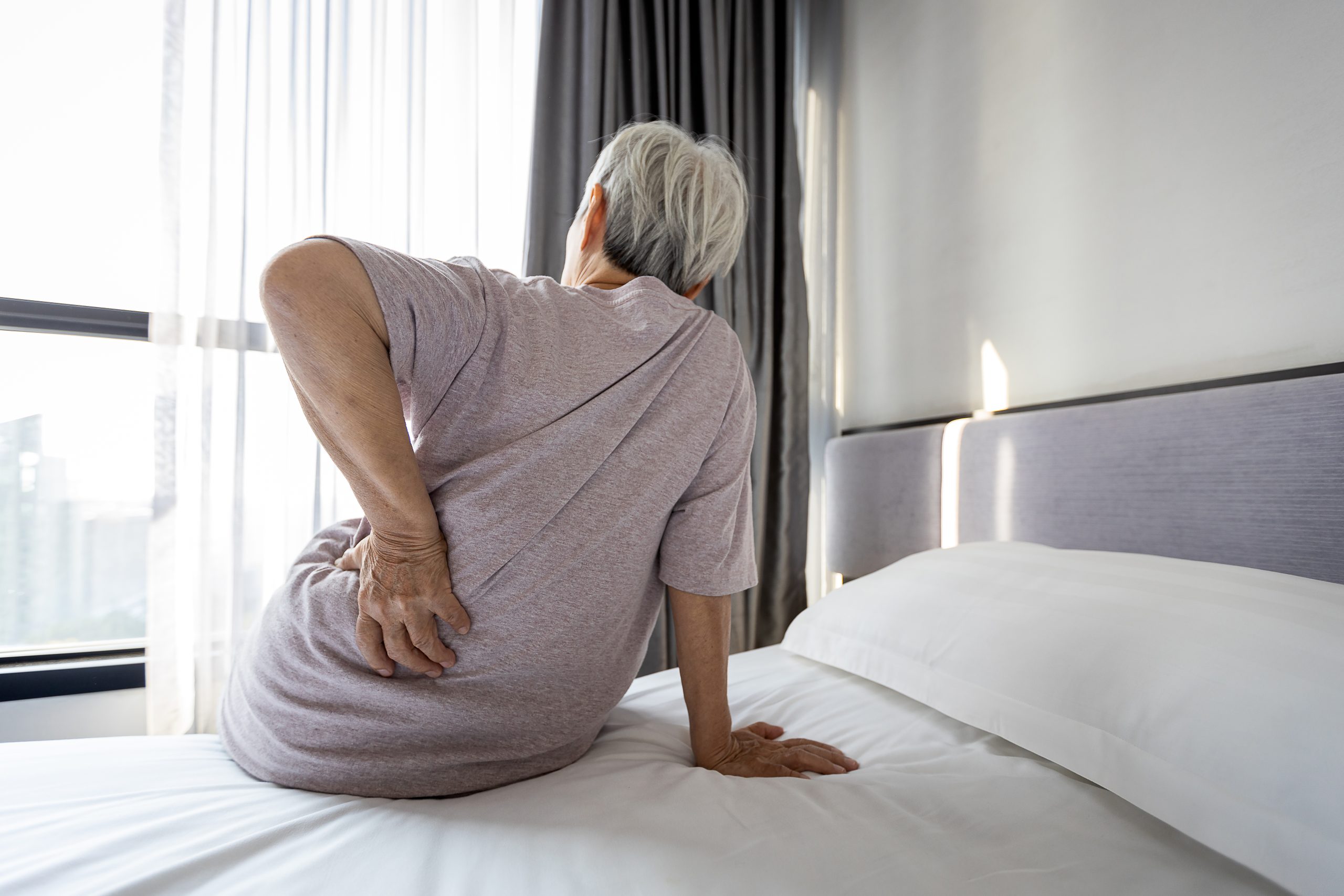

If you’ve ever hurt your back, sprained your ankle, or had orthopedic surgery, your doctor may have recommended a brace. Sure, they’re not exactly stylish, but when you’re dealing with pain, a brace can be a practical part of your daily wardrobe.
Whether it’s for your back, wrist, or knee, bracing helps stabilize the area, reduces pain, maintains alignment, and supports healing.
When Are Braces Used in Pain Care?
Bracing can help relieve pain and discomfort after an accident or overuse injury, and it’s often used for chronic conditions as well. Whether you’re dealing with a sports injury, a work-related strain, or recovering from surgery, a brace may offer the support your body needs to heal.
Here are some common types of braces and when they’re typically used:
- Back braces: Often prescribed for conditions like herniated discs, sciatica, spinal stenosis, or muscle strain to reduce movement, relieve pressure, and support healing.[1]
- Knee braces: Used for ACL or meniscus tears, knee osteoarthritis, or after knee surgery to improve stability and reduce pain.
- Wrist braces: Helpful for carpal tunnel syndrome, wrist sprains, or tendonitis by limiting movement and reducing irritation.
- Neck (cervical) collars: Common after whiplash injuries or neck surgery to protect the cervical spine and ease muscle strain.
Each of these braces can be helpful, but back braces are one of the most commonly used, especially for lower back pain. Let’s look at how they work and why they’re so effective.
What Type of Back Brace Do You Need?
There isn’t just one kind of back brace. Your doctor will determine which is right for you depending on the condition being treated and your recovery goals.
- Rigid: These devices limit most motion in the spine and are typically used after spine surgery or in cases of severe injury.[2]
Semi-rigid: Offers support and compression while allowing more movement than rigid braces, making it ideal for addressing lumbar pain, herniated discs, or degenerative spine issues.[2]
Flexible or compression: Lightweight, soft, and flexible belts, corsets, or neoprene wraps provide posture support while minimizing restriction of movement.[2] Compression braces for joints, such as your knees, provide stability and limit swelling while still allowing for movement.[3]
Wearing a brace when you don’t need one—or choosing the wrong type—can actually make things worse, so it’s best to check with your doctor before picking one up off the shelf.
The Benefits of Bracing for Back Pain
Back braces aren’t a cure-all, but they can offer real benefits, mainly when used under the expert guidance of your pain specialist. They may provide added support, reduce strain on the spine, and help improve posture. For many, a brace can be a helpful part of a broader pain management plan.
Reduce Back Pain
Braces help limit painful movements and take pressure off affected nerves or joints. By restricting motion and supporting spinal alignment, a back brace can help alleviate discomfort associated with conditions such as sciatica, herniated discs, or muscle strain.[4]
Promote Healing and Recovery
Whether you’re recovering from surgery or a muscle strain, stabilizing the area gives tissues time to heal without added stress. A properly fitted brace can reduce micro-movements that aggravate healing tissues, creating a more supportive environment for recovery.[1]
Helps Reinforce Proper Posture and Movement
Back braces can gently guide your spine into better alignment, which helps reduce strain and creates a more stable environment for healing the moving parts of your spine. By limiting excessive movement, a brace can also encourage better posture and make physical therapy exercises safer and more effective, especially when combined with a structured rehab plan.[4]
Improved Function
When pain is under control, it’s easier to get back to your daily activities, including physical therapy, safely and confidently.[4]
Reduces the Risk of Re-Injury
While back braces don’t guarantee injury prevention, they can help stabilize the spine and reduce strain, especially during heavy lifting or physical activity.[5;6] By reminding you to move carefully and limiting risky motions, a brace may provide an added layer of protection during recovery or heavy use.
Limits Movement (When Necessary)
It might sound counterintuitive, but sometimes less movement is precisely what your body needs. Specific back injuries, chronic conditions, or post-surgical recoveries require limiting bending and twisting to protect the spine as it heals.[1]
Psychological Benefits of Bracing
Dealing with chronic pain isn’t just physical—it can lead to anxiety and fear of moving. Studies show that wearing a lumbar brace after spine surgery helps reduce fear of movement (kinesiophobia), anxiety, and even depression during the early recovery period.[7;8] That added sense of security and stability can help you stay active.
When Is a Back Brace a Bad Idea?
Back braces can be a big help, but they’re not for everyone. Using one too long without strengthening your core can actually make things worse. They can also cause problems if worn incorrectly or if you have certain conditions, like skin irritation or circulation issues.[4; 1]
Always consult with your doctor to determine if a back brace is suitable for your specific situation.
Should You Consider a Back Brace as Part of Your Pain Management Treatment Plan?
If you’re dealing with persistent back pain or recovering from an injury, a back brace might help you move more comfortably and heal more effectively. But it’s rarely a standalone fix. Bracing often works best when combined with other interventional pain management treatments—like targeted injections, physical therapy, or nerve blocks—that address both the symptoms and the source of your pain.
Working with pain specialists allows for personalized treatment that includes custom or off-the-shelf bracing when it adds real value to your healing journey. With proper support, you can protect your spine, ease discomfort, and stay active while your body heals.
Resources:
- Schott C, Zirke S, Schmelzle JM, Kaiser C, Fernández LAI. Effectiveness of lumbar orthoses in low back pain: Review of the literature and our results. Orthop Rev (Pavia) [Internet]. 2018;10(4):7791. Published 2018 Dec 6. doi:10.4081/or.2018.7791. Accessed June 24, 2025. Available from: https://pmc.ncbi.nlm.nih.gov/articles/PMC6315306/
- Dang S. Types of Back Braces Used for Lower Back Pain Relief. Spine-health [Internet]. Accessed June 23, 2025. Available from: https://www.spine-health.com/treatment/alternative-care/types-back-braces-used-lower-back-pain-relief
- Sears B. What Is a Compression Brace? Very Well Health [Internet]. Updated November 12, 2023. Accessed June 23, 2025. Available from: https://www.verywellhealth.com/compression-brace-5119812
- Dang S. Using a Back Brace for Lower Back Pain Relief. Spine-health [Internet]. Updated July 03, 2018. Accessed June 23, 2025. Available from: https://www.spine-health.com/treatment/alternative-care/using-back-brace-lower-back-pain-relief
- Kraus JF, Brown KA, McArthur DL, Peek-Asa C, Samaniego L, Kraus C. Reduction of Acute Low Back Injuries by Use of Back Supports. Int J Occup Environ Health [Internet]. 1996 Oct;2(4):264-273. doi: 10.1179/oeh.1996.2.4.264. PMID: 9933880. Accessed June 23, 2025. Available from: https://pubmed.ncbi.nlm.nih.gov/9933880/
- Smith S. Study: Back Supports Reduce Injury Rates as much as 26 Percent. EHS Today [Internet]. Published July 11, 2002. Accessed June 23, 2025. Available from: https://www.ehstoday.com/archive/article/21905592/study-back-supports-reduce-injury-rates-as-much-as-26-percent
- Yang Y, Zhang H, Tian X, Wang S, Chen Y, Zhang J. Association between Adverse Psychological Emotions and Postoperative Brace for Adolescent Idiopathic Scoliosis: A Prospective Cohort Study with Propensity Score Matching. Orthop Surg [Internet]. 2024;16(8):1920-1928. doi:10.1111/os.14129. Accessed June 23, 2025. Available from: https://pmc.ncbi.nlm.nih.gov/articles/PMC11293913
- Martinez-Calderon J, Flores-Cortes M, Morales-Asencio JM, Luque-Suarez A. Conservative interventions reduce fear in individuals with chronic low back pain: A systematic review. Archives of Physical Medicine and Rehabilitation [Internet]. 2019;101(2):329-358. doi:https://doi.org/10.1016/j.apmr.2019.08.470. Accessed June 23, 2025. Available from: https://www.sciencedirect.com/science/article/abs/pii/S0003999319310482